

What's Happening?
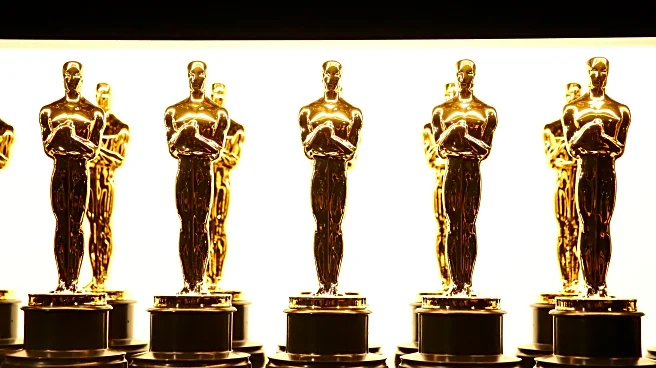
The 98th Academy Awards, set to take place on March 15, 2026, at the Dolby Theater in Los Angeles, will feature several notable developments. The film 'Sinners' leads with a record-breaking 16 nominations, surpassing the previous record of 14 nominations held
by 'All About Eve', 'Titanic', and 'La La Land'. 'One Battle After Another' follows with 13 nominations. This year, the Oscars will introduce a new category, Achievement in Casting, marking the first new category since 2001. The ceremony will be hosted by Conan O'Brien for the second consecutive year, and will feature performances from nominees for Best Original Song, including 'Golden' from 'KPop Demon Hunters' and 'I Lied to You' from 'Sinners'.
Why It's Important?
The introduction of the Achievement in Casting category highlights the evolving recognition of diverse contributions to filmmaking. This change reflects a broader industry trend towards acknowledging the multifaceted roles that contribute to a film's success. The record number of nominations for 'Sinners' underscores the film's critical acclaim and potential influence on future cinematic trends. The Oscars remain a significant cultural event, influencing public interest in nominated films and impacting box office performance. The ceremony's adaptations, including new categories and diverse performances, aim to maintain relevance and engagement in a rapidly changing entertainment landscape.
What's Next?
As the Oscars approach, anticipation builds around potential winners and the impact of the new casting category. Industry stakeholders, including casting directors and filmmakers, will be closely watching the reception of this new category, which could influence future award considerations and industry practices. The ceremony's outcome may also affect the careers of nominees and winners, providing increased visibility and opportunities. Additionally, the Oscars' ability to adapt and innovate will be scrutinized as it seeks to maintain its status as a premier awards event amidst evolving audience expectations and media consumption habits.