







What's Happening?
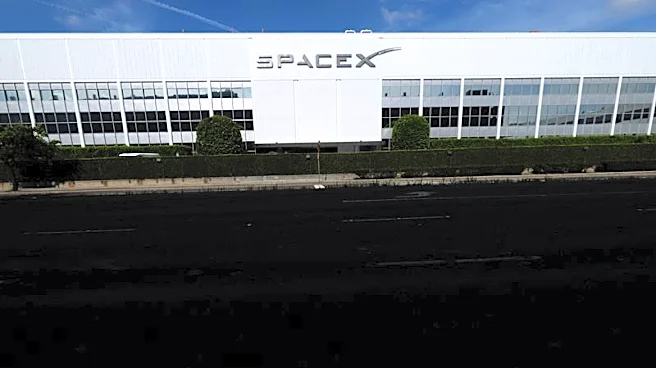
SpaceX, led by Elon Musk, has filed financial documents with regulators to initiate what could become the largest initial public offering (IPO) in history. The company is reportedly seeking to raise approximately $80 billion, potentially valuing SpaceX at over
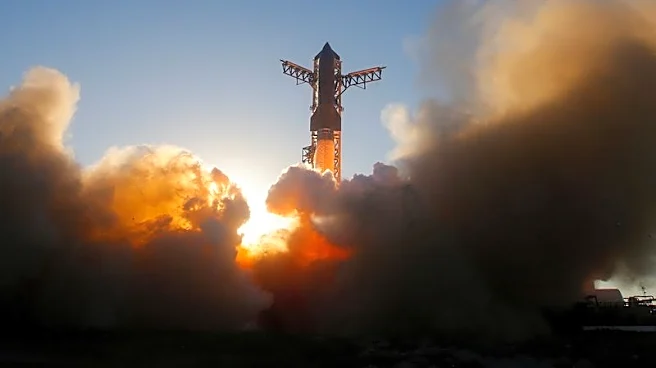
$1 trillion. This valuation would surpass the $29 billion raised by Saudi Aramco in 2019, marking a significant milestone in financial markets. SpaceX's IPO is anticipated to be a major event on Wall Street, with the company already dominating the space launch market and operating the only satellite internet service, Starlink. The company has also merged with Musk's artificial intelligence firm, xAI, and is investing heavily in future projects such as orbital data centers and moon bases. Despite its ambitious plans, SpaceX reported a net loss of nearly $4.3 billion in the first quarter of the year, with only its satellite communications business turning a profit.
Why It's Important?
The SpaceX IPO is poised to be a landmark event in the financial world, potentially revitalizing a sluggish IPO market. It offers public investors a chance to buy into one of the most influential private tech companies, which is at the forefront of the AI and space industries. The IPO could significantly enrich Elon Musk, already one of the world's wealthiest individuals, and further solidify SpaceX's position as a leader in space exploration and satellite communications. However, the move also subjects the company to increased scrutiny from financial regulators and the public, which could impact its valuation and operations. The success of this IPO could set a precedent for other tech giants like OpenAI and Anthropic, which are also considering going public.
What's Next?
As SpaceX moves forward with its IPO, the company will likely face intense scrutiny from investors and regulators. The success of the IPO could influence the timing and strategy of other tech companies considering public offerings. Additionally, SpaceX's ambitious projects, such as building moon bases and Mars colonization, will require substantial capital, which the IPO could help secure. The company's financial performance post-IPO will be closely watched, particularly its ability to turn its ambitious plans into profitable ventures. Stakeholders will also be interested in how SpaceX navigates the challenges of public market expectations and regulatory compliance.
Beyond the Headlines
The SpaceX IPO highlights the growing intersection of space exploration and artificial intelligence, with significant implications for both industries. The company's focus on reusable rockets and satellite internet services could drive innovation and competition in these sectors. Moreover, the IPO underscores the influence of charismatic leaders like Elon Musk in shaping market perceptions and valuations. As SpaceX transitions to a public company, it will need to balance its visionary goals with the practicalities of shareholder expectations and regulatory requirements. This development could also spark discussions about the role of private companies in space exploration and the ethical considerations of AI integration in such ventures.