






What's Happening?
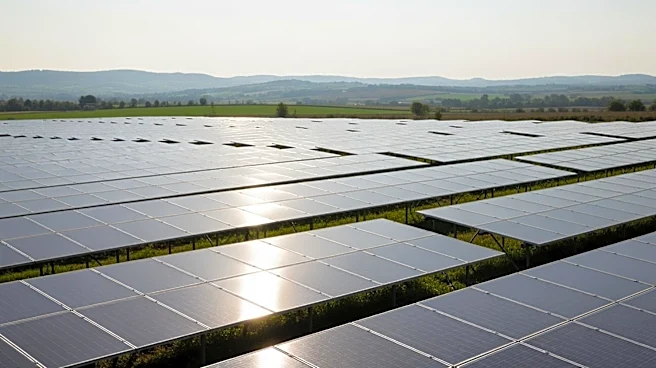
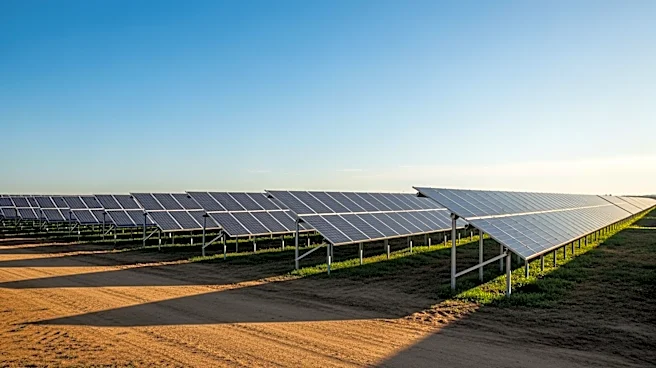
Fortescue, an Australian iron-ore mining company, has commenced the construction of a 690 MW solar farm at Turner River in the Pilbara region. This project is the final solar installation required to fulfill the company's Real Zero decarbonization plan.
Alongside this, Fortescue is also developing a 650 MWh battery energy storage system (BESS) at its Cloudbreak operation, which will complement an existing 190 MW solar farm. These initiatives are part of Fortescue's Pilbara Green Grid, an integrated renewable energy ecosystem designed to power its operations with renewable energy. The Turner River solar farm, once completed, will contribute to a total renewable energy capacity of over 1.4 GW, sufficient to power approximately 500,000 Australian homes. The construction of the solar farm is expected to be completed by 2028, with the Cloudbreak BESS anticipated to be operational by the 2027 financial year.
Why It's Important?
The development of the Turner River solar farm and associated renewable energy projects is significant as it represents a major step towards Fortescue's goal of achieving Real Zero emissions across its operations. By investing in renewable energy infrastructure, Fortescue is positioning itself as a leader in the mining industry's transition to sustainable energy sources. This move not only aligns with global efforts to combat climate change but also enhances the company's energy security and reduces its reliance on fossil fuels. The successful implementation of these projects could serve as a model for other mining companies and industries looking to decarbonize their operations. Additionally, the expansion of renewable energy capacity in the Pilbara region could stimulate local economic growth and create job opportunities.
What's Next?
As Fortescue progresses with its renewable energy projects, the company plans to continue electrifying its mobile mining fleet, with a target of having half of its excavator fleet electric by the end of 2026. The first battery-electric haul truck is expected to be operational by the end of the year, supported by the commissioning of a 6 MW fast charger. Fortescue is also advancing the construction of the 133 MW Nullagine Wind Farm to further diversify its renewable energy mix. The company has already built over 480 km of high-voltage transmission infrastructure, with plans to extend the network beyond 620 km to connect its renewable energy assets to its mining operations. These developments indicate Fortescue's commitment to achieving its decarbonization goals and could influence other companies to adopt similar strategies.