
What's Happening?
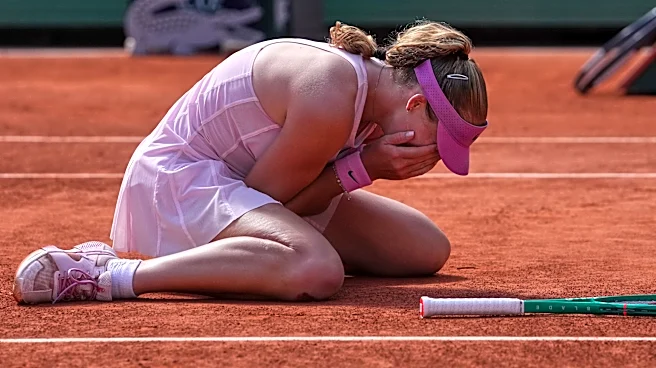
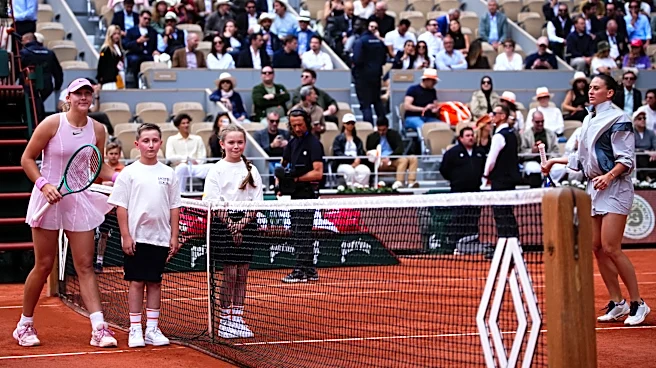
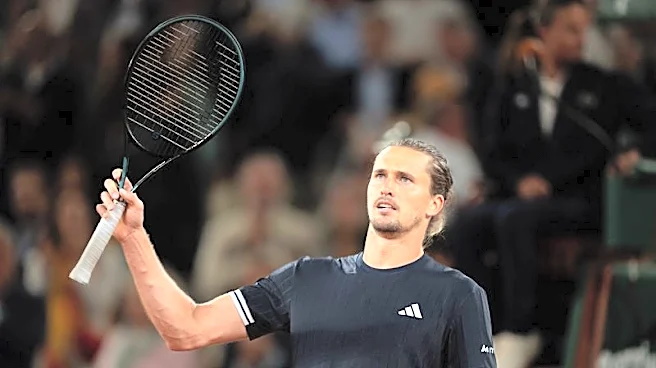
The French Open 2026 is reaching its climax with the finals scheduled at Roland Garros. On Saturday, Russian teenager Mirra Andreeva claimed her first Grand Slam title by defeating Polish qualifier Maja Chwalinska. The men's final will see Alexander Zverev,
the second seed, competing against Italy's Flavio Cobolli. The tournament has been marked by a prize money dispute, with top players demanding a higher share of the revenue generated by the four major tournaments. The total prize money for the event is 61.7 million euros, with the singles champions set to receive 2.8 million euros each. Notably, no British players advanced to the third round, with Katie Boulter being the last to exit after a three-set match against Potapova.
Why It's Important?
The French Open is a significant event in the tennis calendar, drawing attention to ongoing issues such as prize money distribution. The demand for a higher percentage of revenue by top players highlights the financial disparities within the sport. This situation could lead to changes in how revenue is shared among players, potentially impacting future tournaments. Additionally, the absence of British players in the later stages of the tournament may prompt discussions about the state of British tennis and the need for development programs to nurture talent capable of competing at the highest levels.
What's Next?
As the tournament concludes, the focus will shift to the aftermath of the prize money dispute. Players and organizers may engage in negotiations to address the concerns raised, which could influence the financial structure of future Grand Slam events. The performance of players like Zverev and Andreeva will also be scrutinized as they continue their careers, with potential implications for their rankings and sponsorship opportunities. The absence of British players in the later rounds may lead to strategic changes in training and development programs within the UK.