




What's Happening?
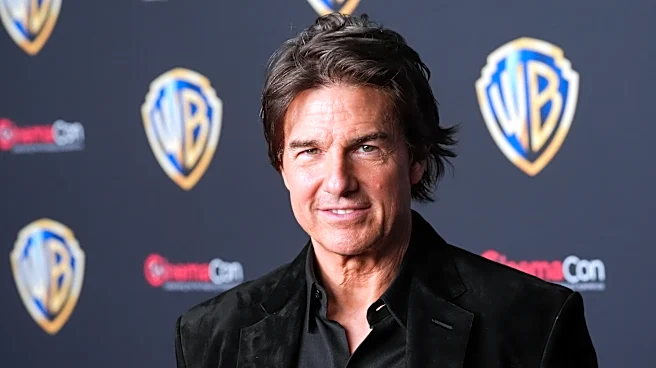
Warner Bros. has showcased a first look at 'The Great Beyond,' a sci-fi/fantasy film directed by J.J. Abrams, during CinemaCon. This marks Abrams' return to directing since his work on 'Star Wars: The Rise of Skywalker.' The film stars Glen Powell and
Jenna Ortega and has been shrouded in mystery since its announcement, with its storyline kept under wraps. The preview included a scene featuring an early-generation computer typing a quote from H.G. Wells, suggesting themes of alternate realities. Abrams, who also wrote the script, expressed his desire to return to original storytelling, moving away from franchise films. The film is set for release on November 13 and includes a cast featuring Emma Mackey, Sophie Okonedo, Merritt Wever, and Samuel L. Jackson.
Why It's Important?
The unveiling of 'The Great Beyond' signifies J.J. Abrams' shift from franchise films to original storytelling, which could influence the direction of future sci-fi and fantasy films. Abrams' decision to focus on original content may inspire other filmmakers to explore new narratives, potentially diversifying the genre. The film's release is also significant for Warner Bros., as it continues to leverage its partnership with Abrams' Bad Robot, despite the company's recent downsizing. This move could impact the studio's strategic planning and content production, especially as it navigates changes in the entertainment industry.
What's Next?
Following the preview at CinemaCon, anticipation for 'The Great Beyond' is likely to build as its release date approaches. Warner Bros. and Bad Robot may engage in promotional activities to generate interest and ensure a successful launch. The film's reception could influence Abrams' future projects and the studio's collaboration with Bad Robot. Additionally, the film's performance may impact Warner Bros.'s decision-making regarding its first-look deal with Bad Robot, which is set to continue through the end of the year.
Beyond the Headlines
The decision by Bad Robot to reduce its footprint and close its Los Angeles office reflects broader industry trends of consolidation and strategic realignment. This move may have implications for employment within the company and could affect its ability to produce content at previous levels. The shift to a smaller in-house team in New York suggests a focus on efficiency and potentially more selective project choices, which could influence the types of stories and genres the company pursues in the future.