






What's Happening?
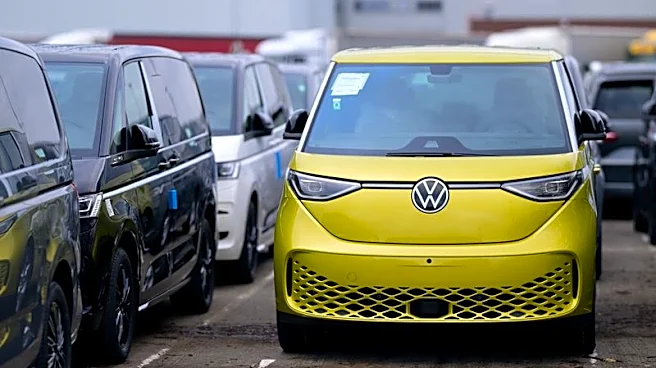
Volkswagen has increased its investment in Rivian, a U.S.-based electric vehicle manufacturer, by purchasing additional shares, raising its stake to 15.9%. This move follows a series of investments totaling $5.8 billion planned through 2027, as Volkswagen seeks
to strengthen its position in the electric vehicle market. The partnership has been beneficial for both companies, with Rivian achieving significant milestones and Volkswagen gaining access to advanced software capabilities. However, Volkswagen faces potential fines of €1.5 billion (~$1.75 billion) due to not meeting electric vehicle sales targets necessary to comply with fleet emissions requirements. The company argues that consumer demand for EVs is insufficient, a claim that has been challenged by the success of other manufacturers like Tesla.
Why It's Important?
Volkswagen's increased investment in Rivian highlights the strategic importance of partnerships in the rapidly evolving electric vehicle market. As traditional automakers face pressure to transition from internal combustion engines to electric vehicles, collaborations with innovative companies like Rivian can provide critical technological advancements and market insights. The potential fines underscore the challenges automakers face in balancing profitability with regulatory compliance and consumer demand. This situation could influence Volkswagen's future strategies and investments, potentially accelerating its shift towards electric vehicles to avoid financial penalties and maintain competitive advantage.
What's Next?
Volkswagen will need to address its electric vehicle sales shortfall to avoid the hefty fines. This may involve ramping up production and marketing efforts to boost consumer interest and sales. The partnership with Rivian could play a crucial role in this strategy, potentially leading to new vehicle models or technologies that appeal to a broader market. Additionally, Volkswagen's response to these challenges could set a precedent for other automakers facing similar regulatory pressures, influencing industry trends and consumer expectations.