







What's Happening?
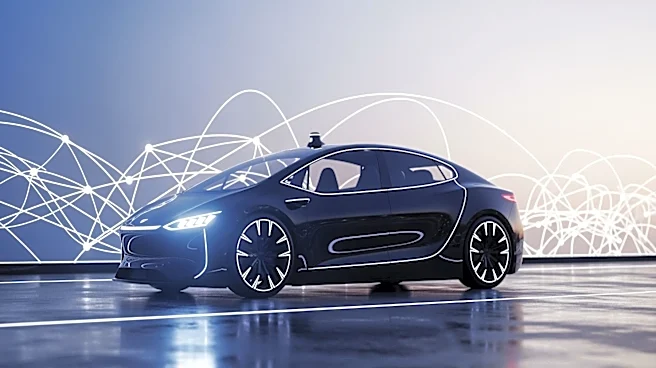
Uber has been actively involved in the development and deployment of autonomous vehicle technology, particularly in partnership with Waymo. Recent developments indicate that Uber's CEO claimed that the approximately 100 Waymo robotaxis deployed in Austin
achieved an average daily trip volume exceeding 99% of human Uber drivers in the city. This highlights the significant progress in the operational capabilities of robotaxis in urban environments. The collaboration between Uber and Waymo is part of a broader trend of deploying autonomous vehicles in cities with dense road networks and moderate traffic flow, which offer the greatest operational potential for robotaxis. The market for robo-taxis is projected to grow significantly, with forecasts indicating a global forecast to 2030.
Why It's Important?
The deployment of robotaxis represents a significant shift in urban transportation, potentially reducing the need for human drivers and altering the landscape of ride-hailing services. This could lead to increased efficiency and reduced costs for companies like Uber, while also impacting employment in the transportation sector. The high utilization rates achieved by Waymo's robotaxis in Austin suggest that autonomous vehicles can effectively compete with traditional ride-hailing services, potentially leading to broader adoption in other cities. However, the commercial viability of robotaxis remains a concern, as highlighted by Uber's CEO, due to high operational costs and the need for further technological advancements.
What's Next?
As robotaxis continue to expand into more communities, cities will need to balance the potential benefits, such as increased safety and efficiency, with the likely negative impacts on employment and traffic. The success of robotaxis in Austin could encourage other cities to adopt similar technologies, leading to further advancements and potential regulatory changes. Companies involved in the development of autonomous vehicles will need to address challenges related to cost, technology, and public acceptance to ensure the long-term success of robotaxis.
Beyond the Headlines
The expansion of robotaxis raises ethical and legal questions, particularly regarding safety and liability in the event of accidents. Additionally, the impact on public transportation systems and urban planning could be significant, as cities may need to adapt infrastructure to accommodate autonomous vehicles. The shift towards autonomous transportation also highlights the need for policies that address the potential displacement of workers in the transportation sector.