
What's Happening?
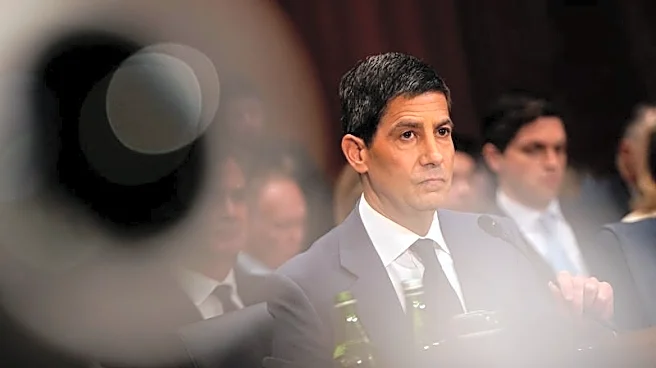
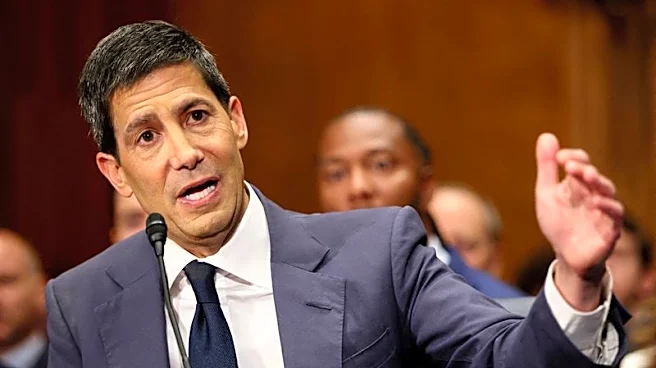
Stephen I. Miran has submitted his resignation as a member of the Federal Reserve Board, effective when or shortly before his successor is sworn in. Miran joined the Board in September 2025 to fill an unexpired
term ending January 31, 2026. Prior to his appointment, he served as chairman of the Council of Economic Advisers under President Trump and held various roles in financial markets and economic policy. His resignation marks a transition period for the Federal Reserve as it prepares for new leadership and potential shifts in monetary policy.
Why It's Important?
Miran's resignation from the Federal Reserve Board comes at a critical time for the U.S. economy, as the central bank navigates challenges such as inflation, interest rates, and economic growth. The appointment of a new board member could influence the direction of monetary policy and impact financial markets. The transition also underscores the importance of leadership stability within the Federal Reserve, as it plays a key role in maintaining economic stability and confidence. Stakeholders, including investors, policymakers, and the public, will be closely watching the appointment process and its implications for future economic policy.
What's Next?
The process of appointing a successor to Miran will involve nominations and confirmations, potentially leading to shifts in the Federal Reserve's policy approach. The new board member's views on key economic issues will be scrutinized, as they could influence decisions on interest rates and other monetary policy tools. The Federal Reserve will continue to focus on its dual mandate of promoting maximum employment and stable prices, while addressing emerging economic challenges. The transition may also prompt discussions on the broader composition and diversity of the Federal Reserve Board.