








What's Happening?
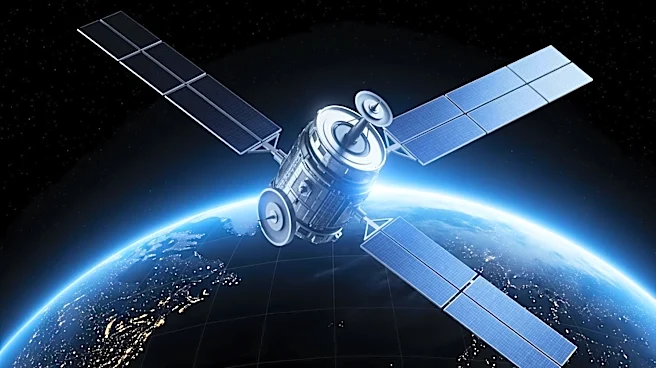
Global Navigation Satellite Systems (GNSS) are integral to modern technology, providing positioning, navigation, and timing (PNT) services. These systems include the U.S. Global Positioning System (GPS), the European Union's Galileo, Russia's GLONASS,
and China's BeiDou, among others. GNSS satellites operate in medium Earth orbit, broadcasting signals that enable devices to determine precise locations through trilateration. This involves using signals from multiple satellites to pinpoint a device's position in terms of latitude, longitude, and altitude. GNSS technology is embedded in various applications, from smartphones and automobiles to critical infrastructure, supporting functions like location sharing, geotagging, and autonomous driving. The U.S. GPS system, developed by the Department of Defense, was the first of its kind and remains a cornerstone of GNSS technology.
Why It's Important?
GNSS technology is foundational to numerous sectors, including transportation, agriculture, and finance. It enables high-precision time synchronization in cellular networks and trading platforms, supports autonomous vehicle navigation, and aids in precision agriculture through crop mapping. The technology's military origins continue to influence defense applications, providing location awareness and situational data. The economic impact of GNSS is substantial, with the U.S. GPS system alone generating $1.4 trillion between the 1980s and 2019. However, the reliance on GNSS also poses risks; a significant outage could cost the U.S. economy up to $1 billion per day, highlighting the critical nature of these systems in maintaining technological and economic stability.
What's Next?
As GNSS technology continues to evolve, its applications are expected to expand further into emerging fields such as smart cities and the Internet of Things (IoT). The integration of GNSS with other technologies, like artificial intelligence and machine learning, could enhance its capabilities, offering more precise and reliable data. Additionally, the development of regional satellite systems by countries like Japan and India suggests a trend towards greater global GNSS coverage and redundancy. This could mitigate the risks associated with reliance on a single system and ensure continued access to critical positioning and timing data.
Beyond the Headlines
The expansion of GNSS technology raises questions about data privacy and security, particularly as more devices become interconnected. Ensuring the integrity and confidentiality of GNSS data will be crucial as its applications grow. Furthermore, the geopolitical implications of GNSS systems, with major powers like the U.S., EU, Russia, and China operating their own constellations, could influence international relations and technological competition. The balance between collaboration and competition in GNSS development may shape the future landscape of global positioning technologies.