

What's Happening?
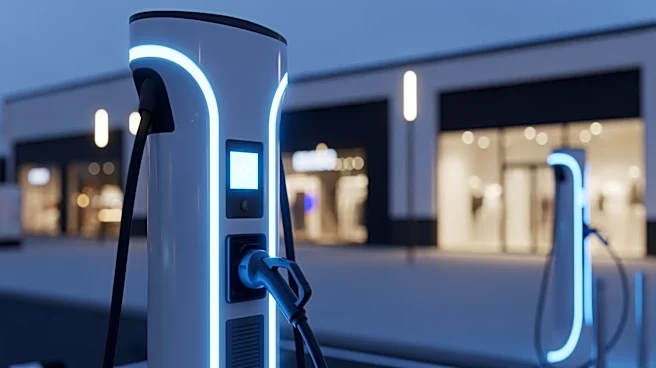
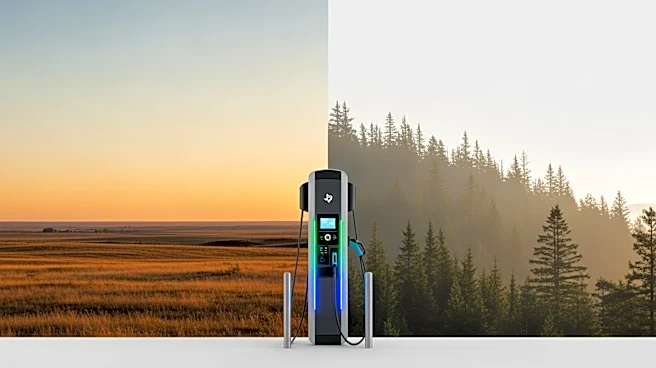
Circle K, a prominent convenience store chain, has announced a partnership with IONNA to install 265 new fast charging stations at its retail outlets across the United States. This initiative aims to enhance the convenience of electric vehicle (EV) charging for
customers, integrating it with the shopping experience. The existing EV chargers at 85 Circle K locations will also be upgraded to IONNA fast chargers. IONNA, backed by major automakers like Toyota, BMW, and GM, is known for its rapid installation of fast chargers, which include NACS and CCS chargers to accommodate a wide range of electric vehicles. This move is part of a broader trend where retail outlets such as Walmart and Kroger are increasingly installing public EV chargers, signaling a growing acceptance of electric vehicles.
Why It's Important?
The expansion of EV charging infrastructure at retail locations like Circle K is significant for several reasons. It reflects a shift towards integrating EV charging with everyday consumer activities, potentially increasing the adoption of electric vehicles by reducing range anxiety. For Circle K, this strategy could attract more customers who may shop while their vehicles charge, thus boosting in-store sales. The partnership with IONNA also positions Circle K as a forward-thinking company in the evolving landscape of transportation and energy. As more consumers transition to electric vehicles, businesses that offer convenient charging solutions may gain a competitive edge.
What's Next?
As Circle K and IONNA roll out these new charging stations, other retail chains may follow suit, further expanding the EV charging network across the U.S. This could lead to increased competition among retailers to offer the best charging and shopping experiences. Additionally, the success of this initiative may prompt Circle K to explore further partnerships or expansions in the EV charging sector. Stakeholders, including automakers and energy companies, will likely monitor these developments closely as they could influence future collaborations and investments in EV infrastructure.