
What's Happening?
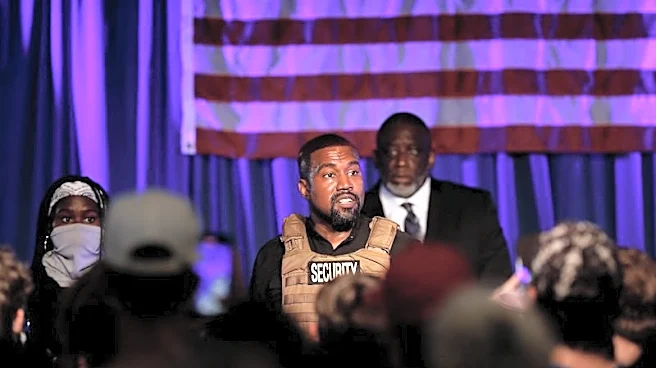
The Wireless Festival in London has been officially canceled after Kanye West, known as Ye, was denied entry into the United Kingdom. The U.K. Home Office blocked his travel visa, citing his past antisemitic
and pro-Nazi comments as reasons for his presence being 'not conducive to the public good.' Ye was scheduled to headline the festival, which was set to take place in July. The decision follows a mass withdrawal of sponsors, including Pepsi and PayPal, due to the controversy surrounding Ye's past remarks. Despite the backlash, Ye expressed a willingness to engage with the Jewish community in the U.K. to demonstrate change.
Why It's Important?
This development highlights the significant influence of public and corporate responses to controversial figures in the entertainment industry. The cancellation of a major event like the Wireless Festival due to a headliner's past actions underscores the importance of accountability and the potential financial and reputational risks for event organizers and sponsors. It also reflects broader societal shifts towards zero tolerance for hate speech and the prioritization of community values over commercial interests. The incident may lead to increased scrutiny of artists' past behaviors and influence future booking decisions in the industry.
What's Next?
In the wake of the festival's cancellation, organizers will need to manage the financial implications and address the concerns of ticket holders and stakeholders. Kanye West may seek to rehabilitate his public image and explore other performance opportunities. The situation could prompt a reevaluation of policies regarding artist bookings and sponsorships, potentially leading to more stringent vetting processes. Additionally, the U.K. Home Office's decision may serve as a precedent for future travel restrictions based on public safety and community values, affecting other artists with controversial histories.