





What's Happening?
MacroGenics, Inc., a clinical-stage biopharmaceutical company, has announced significant financial and operational developments aimed at extending its cash runway through 2028. The company has completed the enrollment of the dose escalation portion of a Phase
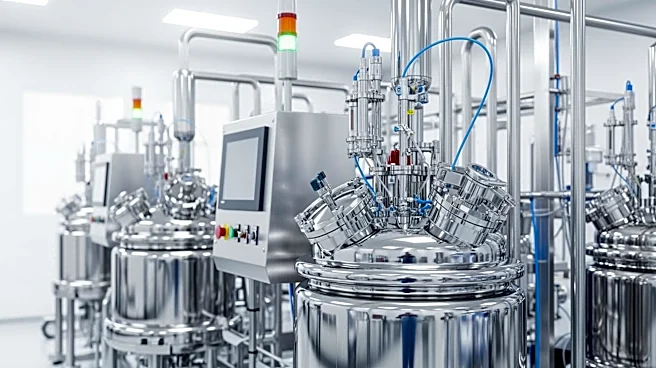
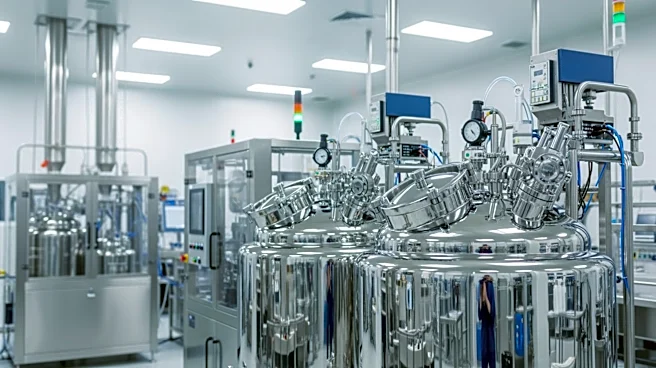
1 study for its antibody-drug conjugate (ADC), dapotamab deruxtecan, and is currently enrolling patients in the dose expansion portion. This study is crucial for determining the safety, side effects, and appropriate dosing of the drug, which is being developed for lung cancer treatment. Additionally, MacroGenics has entered into a definitive agreement to sell its manufacturing operations to Bora Pharmaceuticals, a move expected to generate $122.5 million. This divestiture, along with the expanded monetization of its ZYNYZ royalty, is anticipated to provide up to $202.5 million in proceeds, supporting the company's focus on novel drug discovery and development.
Why It's Important?
The strategic decisions by MacroGenics to divest its manufacturing operations and monetize its ZYNYZ royalty are pivotal in securing non-dilutive capital, which is essential for sustaining its operations and advancing its pipeline of innovative cancer treatments. By focusing resources on its core capabilities in drug discovery and development, MacroGenics aims to enhance its competitive position in the biopharmaceutical industry. The extended cash runway through 2028 provides the company with financial stability to pursue its research and development goals without immediate financial pressure. This move is likely to attract investor confidence, as it demonstrates a clear strategy to maximize the value of its pipeline and strengthen its financial position.
What's Next?
MacroGenics plans to continue enrolling patients in the dose expansion portion of its Phase 1 study for dapotamab deruxtecan, with initial clinical data expected in mid-2026. The company also anticipates multiple data disclosures and program milestones for its ADC pipeline throughout the year. The divestiture of its manufacturing operations is expected to close in the third quarter of 2026, subject to customary closing conditions. MacroGenics will transition to a fully outsourced manufacturing model, which is expected to provide increased flexibility and cost advantages. The company will also continue to explore additional monetization opportunities and strategic partnerships to further support its growth and development initiatives.