
What's Happening?
Lockheed Martin, PG&E Corp., Salesforce, and Wells Fargo have announced a new collaboration to form a venture called Emberpoint, aimed at advancing technology to prevent, detect, and fight wildfires more
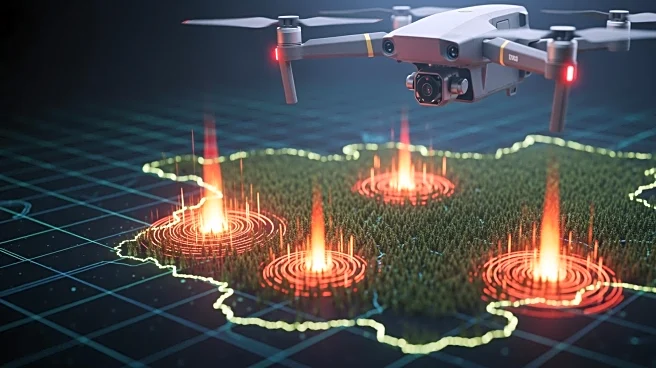
effectively. The initiative seeks to make wildfire prevention more affordable and efficient. Lockheed Martin, known for its aerospace and defense capabilities, will integrate data from space, ground, and air to predict fire outbreaks, while PG&E will contribute its expertise in wildfire mitigation, including underground power lines and AI-powered weather stations. Salesforce will provide a platform to coordinate responses and integrate data streams into a unified system. The venture has already secured over $100 million in funding, with Wells Fargo contributing to the investment. This collaboration comes in response to increasingly destructive wildfires, particularly in California, which have caused significant damage and loss of life.
Why It's Important?
The formation of Emberpoint represents a significant step in leveraging technology to address the growing threat of wildfires, which have become more frequent and severe due to climate change. By combining the expertise of major corporations in aerospace, energy, and technology, the venture aims to enhance the capabilities of firefighters and emergency responders. The use of AI, satellite imagery, and autonomous technologies could revolutionize how wildfires are managed, potentially reducing the economic and human toll. This initiative also highlights the role of private sector innovation in addressing public safety challenges, offering a model for future collaborations in disaster management.
What's Next?
The Emberpoint team will develop and demonstrate its technologies in the coming months, with a focus on improving firefighting intelligence. The venture plans to seek regulatory approval for PG&E to share information with its partners, which could enhance the effectiveness of the collaboration. As the project progresses, it may attract additional partners and funding, further expanding its capabilities. The success of Emberpoint could lead to broader adoption of similar technologies in other regions prone to wildfires, potentially influencing public policy and investment in disaster prevention.