



What's Happening?
Decathlon, the world's largest sporting goods retailer, has integrated Exotec's warehouse robots in seven of its European warehouses, resulting in significant productivity gains. The partnership with Exotec, a French warehouse robotics company, has enabled
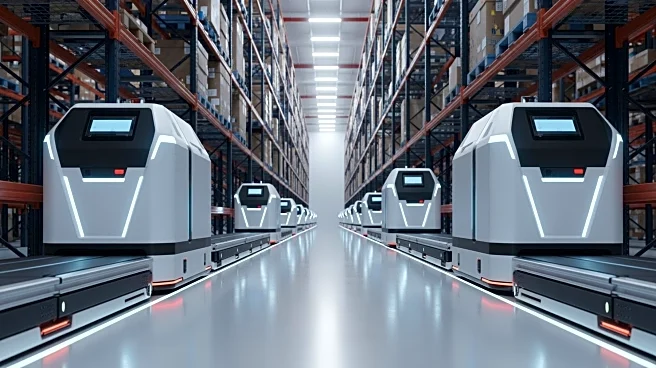
Decathlon to double its warehouse output while reducing the physical footprint of its facilities. The robots, known as Skypods, are designed to climb vertically, allowing for a more efficient use of space. This automation has also reduced the walking distance for pickers and decreased workplace incidents. The initiative addresses labor shortages in warehouse logistics, a growing issue in Europe, Japan, and the United States.
Why It's Important?
The implementation of Exotec's robots by Decathlon highlights a significant shift towards automation in warehouse logistics, driven by labor shortages and the need for increased efficiency. This move not only enhances productivity but also reduces operational costs by minimizing the need for larger warehouse spaces. The success of this initiative could set a precedent for other retailers facing similar challenges, potentially leading to widespread adoption of robotic solutions in logistics. This trend could impact employment in the sector, as automation may reduce the demand for manual labor, although it also presents opportunities for workers to transition to roles that require managing and maintaining these automated systems.
What's Next?
As Decathlon continues to expand its use of Exotec's robots, other retailers may follow suit, leading to a broader transformation in warehouse logistics. The success of this initiative could encourage further investment in automation technologies, potentially accelerating the development of more advanced robotic solutions. Additionally, the reduction in warehouse size and increased efficiency may allow retailers to allocate resources to other areas, such as enhancing customer service or expanding product lines. The ongoing labor shortages in logistics may also drive innovation in automation, as companies seek to maintain productivity levels without relying heavily on human labor.