



What's Happening?
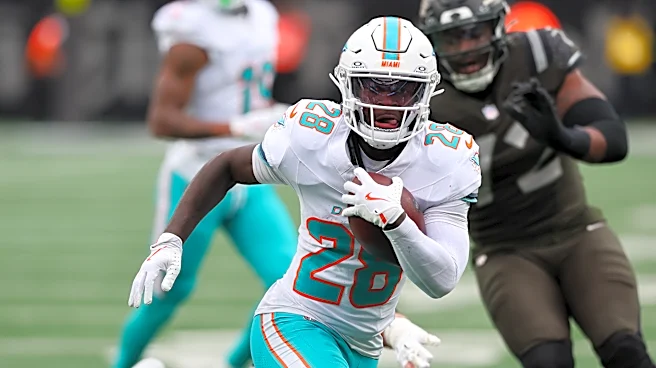
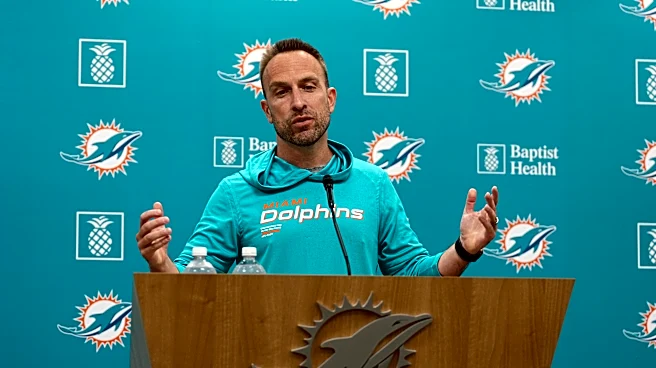
The Miami Dolphins have undergone a significant transformation in the past three months, marked by a complete overhaul of their roster and a shift in team identity. Under the new leadership of General Manager Jon-Eric Sullivan and Coach Jeff Hafley, the Dolphins have released
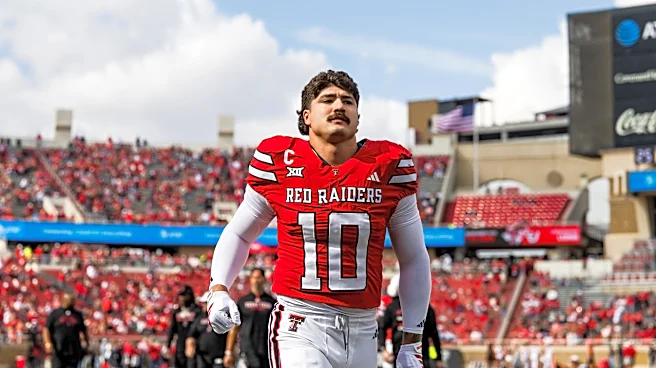
key players such as quarterback Tua Tagovailoa, wide receiver Tyreek Hill, and linebacker Bradley Chubb. Additionally, trades have sent safety Minkah Fitzpatrick and wide receiver Jaylen Waddle to other teams. This restructuring has resulted in an unprecedented $179 million in dead salary cap money. The team is now focused on building a younger, more cost-effective roster, having added 13 players in the recent NFL draft. The Dolphins are embracing a new culture that emphasizes humility and teamwork, moving away from the star-driven approach of previous years.
Why It's Important?
This transformation is crucial for the Dolphins as they aim to break a 26-year playoff win drought, the longest in major American professional sports. The overhaul reflects a strategic pivot towards long-term sustainability and competitiveness, focusing on drafting and developing homegrown talent. The changes also highlight the team's commitment to building a cohesive unit rather than relying on individual star power. This approach could set a precedent for other NFL teams facing similar challenges. The success of this strategy will be closely watched by stakeholders, including fans, players, and the broader NFL community, as it could influence future team-building philosophies across the league.
What's Next?
The Dolphins are in a rebuilding phase, with a focus on developing their new roster and establishing a strong team culture. The upcoming season will be a test of the new strategy, as the team aims to exceed low external expectations and prove that their new approach can lead to success on the field. The Dolphins' management will need to balance patience with the pressure to deliver results, as team owner Stephen Ross has shown a willingness to make changes if progress towards a championship is not evident. The team's performance in the upcoming season will be critical in determining the viability of their long-term plan.