
What's Happening?
The LED farming market in the United States is experiencing significant growth, driven by key acquisitions and technological advancements. Companies like Hydrofarm, Signify, and Acuity Brands have made
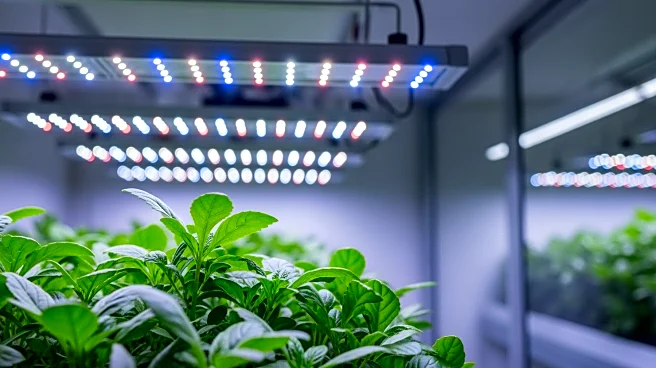
strategic acquisitions to expand their LED horticulture lighting portfolios. These moves are aimed at enhancing their capabilities in vertical farming and greenhouse markets. The market is projected to grow at a compound annual growth rate (CAGR) of 11.12% between 2025 and 2032. Innovations in full-spectrum LEDs are improving crop yields and energy efficiency, while AI-driven light modulation techniques are enhancing plant growth. The decline in LED fixture costs is making indoor farming more accessible, and new regulations are being introduced to standardize equipment safety.
Why It's Important?
The expansion of the LED farming market is crucial for the agricultural sector, particularly in addressing the challenges of food security and sustainable farming practices. The adoption of LED technology in farming can lead to increased crop yields and reduced energy consumption, which are vital for meeting the growing demand for food. The market's growth also presents opportunities for economic development and job creation in the agri-tech industry. As consumer demand for locally grown and sustainable produce increases, the LED farming market is poised to play a significant role in transforming agricultural practices in the U.S.
What's Next?
As the LED farming market continues to grow, further investments in smart LED systems integrated with IoT sensors are expected. These advancements will likely lead to more precise and efficient farming practices. Industry stakeholders may focus on developing precision light recipes for specialty crops, which could enhance the quality and variety of produce available to consumers. Additionally, the introduction of new regulations will ensure the safety and standardization of LED farming equipment, fostering consumer confidence and market stability.