



What's Happening?
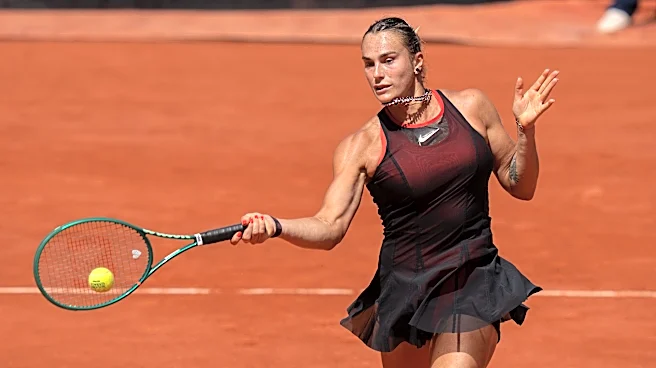
World No. 1 Aryna Sabalenka has called on the French Open organizers to schedule more women's matches during the night sessions. This request follows her victory over Naomi Osaka in a high-profile match that was one of the few women's matches to be featured
in the night session since its introduction in 2021. Sabalenka's win against Osaka, a four-time Grand Slam champion, was a significant event, marking the end of a streak of 33 consecutive men's matches in the night slot. The match, which Sabalenka won 7-5, 6-3, highlighted the potential for women's matches to draw significant attention and atmosphere during these prime viewing times.
Why It's Important?
The inclusion of more women's matches in the night sessions at the French Open could have broader implications for gender equality in sports. Historically, men's matches have dominated these prime-time slots, which are crucial for visibility and sponsorship opportunities. By advocating for more women's matches, Sabalenka is pushing for equal representation and recognition of women's tennis. This move could influence other tournaments to reconsider their scheduling practices, potentially leading to increased viewership and support for women's sports. The decision could also impact the perception of women's tennis, encouraging more fans and sponsors to engage with the sport.
What's Next?
The French Open organizers, led by tournament director Amelie Mauresmo, may need to reassess their scheduling policies in response to Sabalenka's comments and the growing demand for gender equality in sports. If more women's matches are scheduled during night sessions, it could set a precedent for other Grand Slam tournaments. Additionally, the Women's Tennis Association (WTA) and other stakeholders might increase their advocacy efforts to ensure that women's matches receive equal billing. The response from fans and sponsors will also be crucial in determining the future of night session scheduling.