


What's Happening?
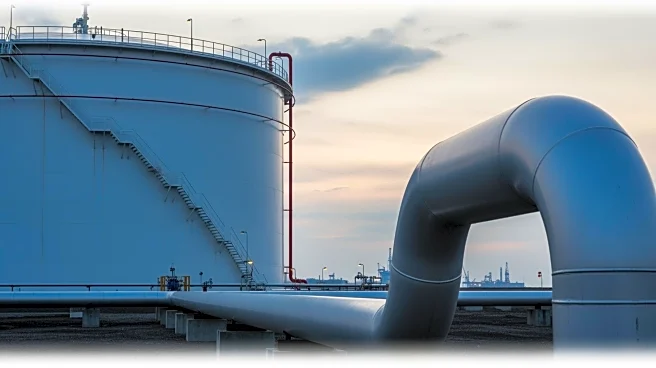
Japan's largest liquefied natural gas (LNG) buyer, JERA, is in discussions with global suppliers to secure additional LNG purchases. This move comes as a response to the ongoing U.S.-Israeli conflict with Iran, which has led to the shutdown of QatarEnergy
LNG facilities, affecting about 20% of the global LNG supply. The disruption has raised concerns over energy security, prompting JERA to consider measures such as energy conservation and the potential restart of dormant power stations, including coal-fired plants. Despite the current volatility, U.S. LNG developer Venture Global, a supplier to JERA, believes the market instability is temporary and expects long-term stability in LNG prices.
Why It's Important?
The disruption in LNG supply due to geopolitical tensions in the Middle East highlights the vulnerability of global energy markets to regional conflicts. For Japan, a country heavily reliant on energy imports, securing a stable LNG supply is crucial for maintaining energy security. The situation underscores the interconnectedness of global energy markets and the potential ripple effects of regional conflicts on energy prices and availability. The actions taken by JERA and other stakeholders could influence energy policies and market dynamics, affecting industries and consumers worldwide.
What's Next?
If the conflict persists, JERA may need to collaborate with the Japanese government to implement energy-saving measures and explore alternative energy sources. The situation could also prompt other countries to reassess their energy security strategies and diversify their energy sources to mitigate similar risks in the future. The development of new LNG projects, such as Venture Global's CP2 LNG project in Louisiana, may play a role in stabilizing the market and ensuring a steady supply of LNG.