
What's Happening?
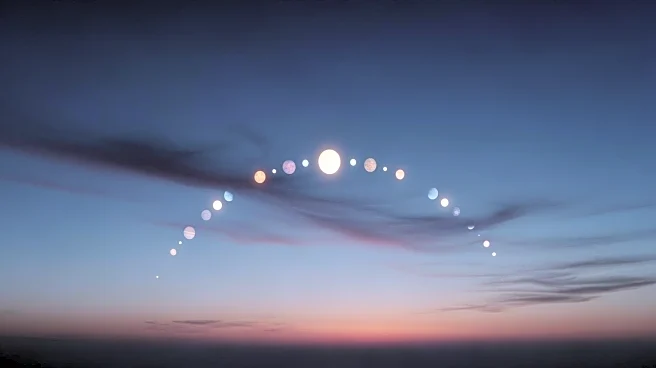
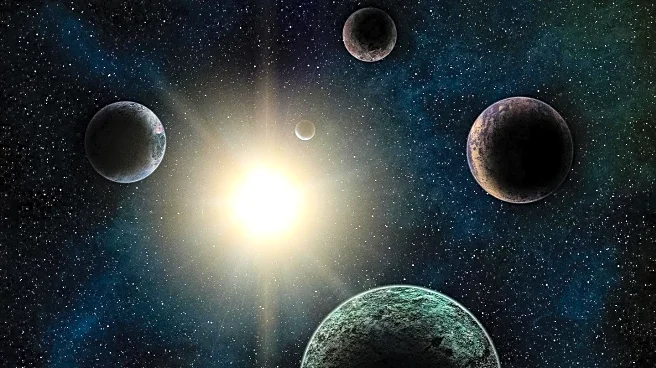
Skywatchers are gearing up for a rare astronomical event where six planets will align in a 'planetary parade' visible in the night sky. This celestial event is concentrated around February 28 and is best observed from locations with a clear view of the horizon.
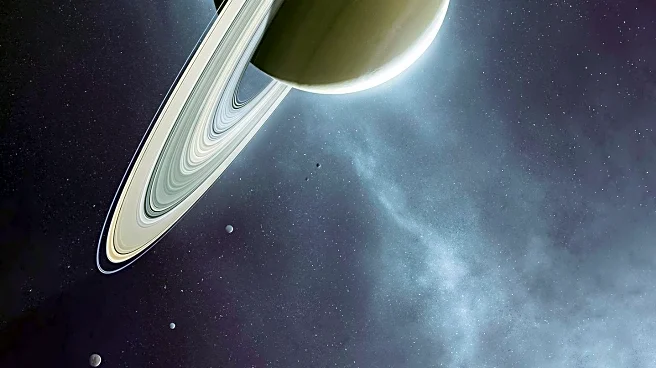
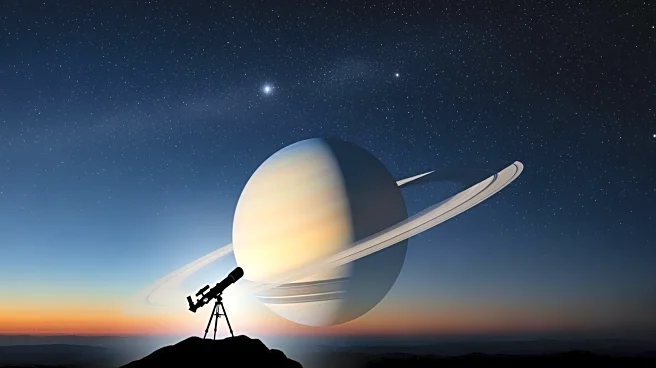
Mercury, Venus, and Saturn will be visible low in the western sky shortly after sunset, while Jupiter will be high in the east, accompanied by the waxing gibbous moon. Neptune and Uranus will also be part of the alignment but require telescopes to be seen due to their dimness and proximity to the sun's glare. Observers are advised to use smartphone stargazing apps to locate the planets and ensure the sun is below the horizon before using telescopic equipment.
Why It's Important?
This planetary alignment offers a unique opportunity for both amateur and professional astronomers to observe multiple planets in a single evening. Such events are significant for educational purposes, inspiring interest in astronomy and science. The alignment also provides a chance for photographers to capture rare celestial images, contributing to public engagement with space science. Additionally, the event highlights the importance of clear skies and minimal light pollution for astronomical observations, raising awareness about environmental factors affecting stargazing.
What's Next?
Observers are encouraged to plan their viewing for the nights surrounding February 28, taking into account local weather conditions and light pollution. The use of technology, such as smartphone apps, can enhance the viewing experience by helping locate planets and constellations. As the event approaches, astronomy clubs and observatories may organize public viewing sessions, providing telescopes and expert guidance to enhance public participation. The event may also lead to increased interest in astronomy-related activities and educational programs.
Beyond the Headlines
The alignment of planets serves as a reminder of the vastness and complexity of our solar system, sparking curiosity about celestial mechanics and the universe. It also underscores the role of technology in modern astronomy, from smartphone apps to advanced telescopes, in making space more accessible to the public. This event may encourage discussions about the preservation of dark skies and the impact of urban light pollution on astronomical observations, promoting initiatives to protect natural night environments.