


What's Happening?
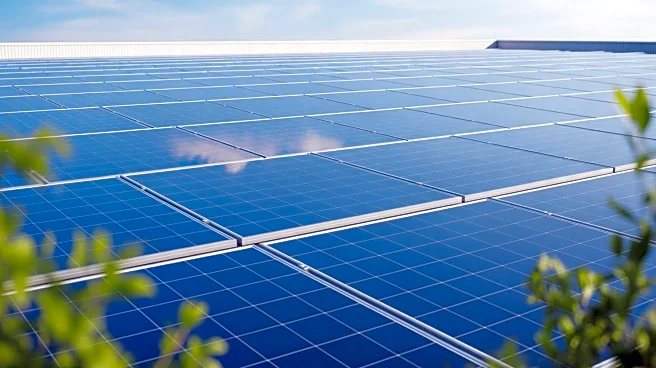
The LEGO Group is advancing its sustainability efforts by expanding solar energy capacity at its new factory in Chesterfield County, Virginia. The company plans to construct a large on-site solar park and install thousands of rooftop solar panels, aiming
to cover 100% of the facility's annual electricity needs with renewable energy. This initiative is part of LEGO's broader climate strategy and represents one of its largest investments in the U.S. The solar park will feature over 30,700 solar panels, delivering 22 megawatt-peak (MWp) of capacity, while an additional 10,080 rooftop panels will contribute another 6.11 MWp. The factory, designed as a long-term manufacturing hub, is also being constructed with mass timber to reduce its carbon footprint. LEGO aims for the facility to achieve LEED Platinum certification, focusing on energy, water, and waste performance, with a goal of zero waste to landfill.
Why It's Important?
LEGO's investment in renewable energy at its Virginia factory underscores the growing trend of integrating sustainability into industrial operations. By committing to renewable energy and sustainable building materials, LEGO is setting a precedent for other manufacturers to follow. This move not only aligns with global climate goals but also supports local economic growth by creating jobs. The factory is expected to employ about 900 people by the end of 2026, with a long-term goal of creating over 1,700 jobs. Additionally, LEGO's efforts contribute to reducing greenhouse gas emissions, a critical step in combating climate change. The project highlights the importance of local solutions tailored to specific site conditions, which can serve as a model for other companies aiming to reduce their environmental impact.
What's Next?
Construction of the solar park is set to begin in summer 2026, with the factory expected to become operational shortly thereafter. As LEGO continues to expand its renewable energy projects globally, the Virginia site will play a crucial role in achieving the company's net-zero emissions target by 2050. The company is also likely to continue its community engagement efforts, having already provided significant grants to local nonprofit organizations. As the factory becomes fully operational, LEGO will need to address the challenge of reducing Scope 3 emissions across its supply chain, which remains a significant hurdle in its sustainability journey.
Beyond the Headlines
LEGO's Virginia factory project illustrates the potential for industrial sites to become centers of sustainability and community development. By using mass timber and aiming for zero waste, LEGO is not only reducing its environmental footprint but also promoting innovative construction practices. The project also emphasizes the importance of corporate responsibility in supporting local communities through job creation and financial grants. As more companies adopt similar strategies, the cumulative impact could lead to significant advancements in sustainable manufacturing and community resilience.