






What's Happening?
Helion, a fusion energy company based in Everett, Washington, has successfully completed a $465-million Series G investment round, elevating its valuation to $15.5 billion. The funding round was led by Thrive Capital and included participation from new
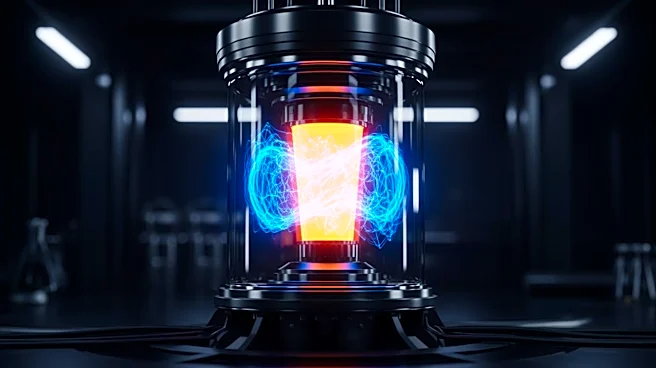
investors such as Alta Park Capital and Ford Motor Co. Executive Chairman Bill Ford, alongside existing investors like Capricorn Technology Impact Funds and SoftBank Vision Fund 2. Helion is focused on commercializing fusion power, having achieved significant milestones with its Polaris prototype, which demonstrated measurable deuterium-tritium fusion and reached plasma temperatures of 150-million degrees Celsius. The company plans to use the funds to further its manufacturing capabilities and continue testing to optimize temperatures for deuterium-helium-3 fusion, a fuel intended for commercial operations.
Why It's Important?
The successful funding round underscores the growing confidence in fusion energy as a viable solution for clean, reliable, and affordable electricity. Helion's advancements in fusion technology could significantly impact the energy sector by providing a sustainable alternative to fossil fuels, thereby reducing carbon emissions and addressing climate change. The company's progress also positions it as a leader in the fusion energy market, potentially influencing energy policies and investment strategies. The involvement of major investors highlights the strategic importance of fusion energy in meeting future energy demands and supporting technological innovations, particularly in sectors like AI and industrial manufacturing.
What's Next?
Helion is set to continue its testing and development efforts, with plans to construct its first commercial fusion machine, Orion, in Malaga, Washington. This project aims to deliver fusion-generated electricity to the grid, with technology giant Microsoft as a key partner. Additionally, Helion is collaborating with Nucor to develop a 500-MW fusion power plant for a steelmaking facility. These initiatives indicate a clear path towards the commercialization of fusion energy, with potential implications for energy markets and industrial applications. The success of these projects could accelerate the adoption of fusion power and influence future energy infrastructure developments.