





What's Happening?
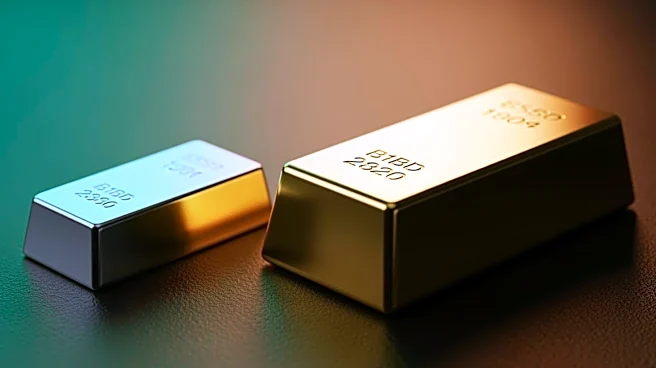
Spot gold and silver prices fell on Monday as crude oil prices surged and U.S.-Iran negotiations remained unresolved. Gold was trading at approximately $4,482.30 per ounce, down 1.26%, while silver was at $74.795 per ounce, down 0.64%. The increase in oil prices followed
a weekend without an agreement to reopen the Strait of Hormuz, a critical oil passage, after military exchanges between the U.S. and Iran. The geopolitical tension has led to higher Treasury yields and a stronger U.S. dollar, negatively impacting gold prices. Despite the conflict risk supporting defensive allocations, the market is experiencing pressure from higher crude prices and volatility in shipping-sensitive sectors.
Why It's Important?
The decline in gold prices amid rising oil prices highlights the complex relationship between geopolitical tensions, commodity markets, and financial stability. Higher oil prices contribute to inflationary pressures, affecting consumer costs and economic growth. The unresolved U.S.-Iran negotiations add uncertainty to global markets, influencing investor behavior and asset allocation. The situation underscores the importance of geopolitical developments in shaping market dynamics and economic policies. Investors and policymakers must consider these factors when making decisions, balancing risk management with opportunities for growth.
What's Next?
The continuation of U.S.-Iran tensions and the potential for further escalation could lead to increased market volatility. Stakeholders, including investors and policymakers, will likely monitor the situation closely, adjusting their strategies in response to geopolitical and economic developments. Any progress in negotiations or changes in military actions could significantly impact oil prices, inflation expectations, and the demand for safe-haven assets like gold. Additionally, upcoming economic data releases may provide further insights into the U.S. economic outlook and influence market sentiment.