







What's Happening?
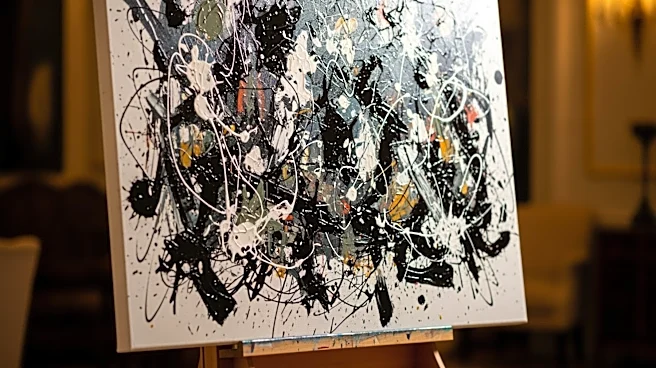
A private auction held by Sotheby's for a Jackson Pollock painting owned by Pace Gallery founder Arne Glimcher did not attract enough bidders, resulting in the sale's collapse. The painting, Number 19, 1951, was priced at $50 million. This event highlights
challenges in the art market, particularly for high-value pieces. The auction was part of a broader trend of restructuring within the art industry, as evidenced by Pace Gallery's recent downsizing, which included reducing its artist roster and staff.
Why It's Important?
The failure to sell such a high-profile artwork underscores potential shifts in the art market, where even established galleries and auction houses face difficulties in securing buyers for expensive pieces. This incident may reflect broader economic uncertainties or changing collector preferences. The art market's dynamics are crucial for artists, galleries, and investors, as they influence pricing, demand, and the overall health of the industry. The outcome of this auction could prompt galleries to reassess their strategies and adapt to evolving market conditions.
What's Next?
Following this unsuccessful auction, Sotheby's and other major auction houses may need to explore new strategies to attract buyers, possibly by adjusting pricing expectations or enhancing marketing efforts. The art market might see increased collaboration between galleries and auction houses to stabilize and stimulate interest in high-value artworks. Additionally, the industry could witness a shift towards more private sales or alternative platforms to reach potential buyers.