


What's Happening?
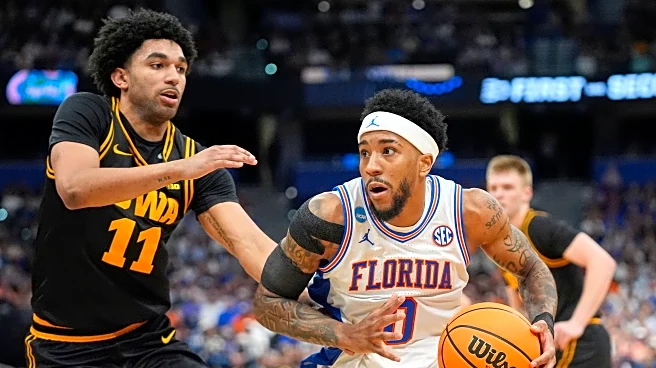
The NCAA Men's Basketball Tournament has reached the Sweet 16 stage, featuring only high-major teams for the second consecutive year. This development follows a series of games where power-conference programs dominated, leaving no room for mid-major teams.
The Big Ten leads with six teams in the Sweet 16, followed by the SEC with four, the Big 12 with three, the Big East with two, and the ACC with one. Notably, St. John's secured a dramatic victory over Kansas, advancing to the Sweet 16 for the first time since 1999. Other notable teams include Duke, UConn, and Michigan State, each making significant strides in the tournament. The absence of mid-major teams has sparked discussions about the tournament's structure and the potential need for changes in automatic qualifiers and bracket expansion.
Why It's Important?
The exclusion of mid-major teams from the Sweet 16 highlights a growing disparity in college basketball, where high-major programs increasingly dominate. This trend could influence future tournament structures, potentially leading to changes in how teams qualify and compete. The dominance of power-conference teams underscores the resources and recruiting advantages they possess, which may widen the gap between them and mid-major programs. This situation could impact the competitive balance in college basketball, prompting discussions among stakeholders about ensuring a more inclusive and diverse tournament field. The current scenario also raises questions about the future of mid-major programs and their ability to compete at the highest levels.
What's Next?
As the tournament progresses, attention will focus on the upcoming Sweet 16 matchups, which promise intense competition among the remaining high-major teams. Stakeholders, including coaches, athletic directors, and NCAA officials, may engage in discussions about potential reforms to the tournament structure to address the absence of mid-major teams. These conversations could explore options such as expanding the bracket or adjusting the criteria for automatic qualifiers. Additionally, the performance of high-major teams in the Sweet 16 will be closely watched, as it may influence future recruiting and strategic decisions within college basketball programs.