






What's Happening?
The oil futures market is experiencing significant volatility due to ongoing supply disruptions caused by the closure of the Strait of Hormuz. Approximately 13 million barrels per day have been removed from global supply, leading to a disconnect between
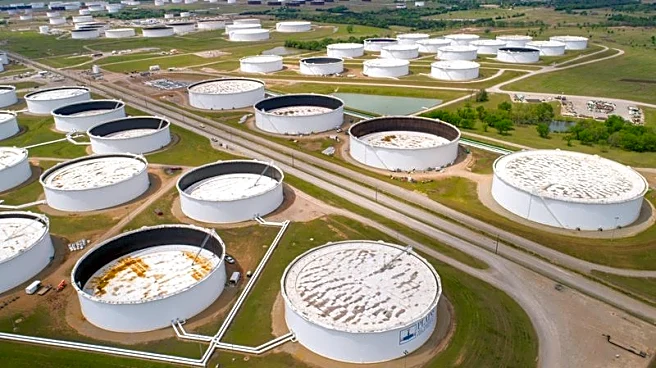
oil prices and actual market conditions. Despite hopes for a resolution to the Middle East conflict, global oil stocks are depleting rapidly as governments draw on strategic reserves. The situation is exacerbated by the slow pace of negotiations between the U.S. and Iran, with the potential for further disruptions if tensions escalate. Industry officials warn that oil inventories are approaching critically low levels, which could lead to a significant price spike in the coming weeks.
Why It's Important?
The potential spike in oil prices poses a significant risk to the global economy, particularly for countries heavily reliant on oil imports. In the U.S., depleted oil inventories could lead to higher fuel prices, impacting transportation costs and consumer spending. The situation underscores the vulnerability of global oil supply chains to geopolitical tensions and highlights the need for diversified energy sources. A sustained increase in oil prices could also influence inflation rates and economic growth, prompting policymakers to consider strategic responses to mitigate the impact on consumers and businesses.
What's Next?
The resolution of the supply disruptions hinges on diplomatic efforts to reopen the Strait of Hormuz and stabilize the region. In the meantime, oil market participants may need to explore alternative supply routes or increase reliance on domestic production to offset shortages. The situation also presents an opportunity for renewable energy advocates to push for accelerated investment in sustainable energy sources, reducing dependence on volatile oil markets. As negotiations continue, stakeholders will closely monitor developments to assess the potential impact on global oil prices and economic stability.