






What's Happening?
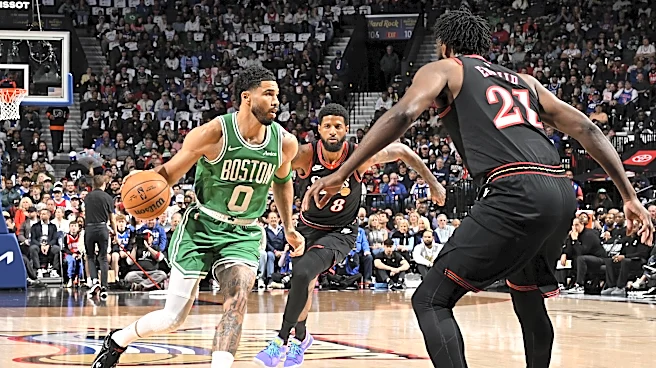
The Philadelphia 76ers faced a significant setback in their playoff series against the Boston Celtics, losing 128-96 in Game 4. The game, held in Philadelphia, marked the return of Joel Embiid, who initially energized the crowd with a strong start. However,
the Celtics quickly took control, exploiting the 76ers' defensive weaknesses, particularly against Boston's five-out lineups. Andre Drummond struggled defensively, and the 76ers were unable to rebound effectively, allowing the Celtics multiple second-chance opportunities. Tyrese Maxey's passive performance in the first half further compounded the team's issues, as he contributed minimally to the offense. Despite Embiid's efforts, the 76ers' reliance on him and lack of shooting depth were evident, leading to a lopsided defeat.
Why It's Important?
This loss highlights ongoing challenges for the 76ers, including their inability to effectively compete against top-tier teams like the Celtics. The defeat raises questions about the team's strategy and roster composition, particularly their lack of depth and shooting capability. The 76ers' struggles in rebounding and defensive execution underscore the need for strategic adjustments. The outcome of this series could have significant implications for the team's future, potentially prompting changes in coaching or player personnel. The Celtics' ability to dominate despite missing key players further emphasizes the 76ers' shortcomings and the need for a reassessment of their competitive approach.
What's Next?
The 76ers must regroup and address their strategic and roster issues to remain competitive in the series. Potential changes could include adjustments in player rotations and defensive strategies to better counter the Celtics' strengths. The team's management may also need to consider long-term changes to improve their competitiveness in future seasons. The Celtics, on the other hand, will look to maintain their momentum and close out the series, capitalizing on their current advantages.