

What's Happening?
As the women's NCAA Tournament progresses into the Sweet 16, only one perfect bracket remains among millions of entries in the ESPN bracket challenge and those tracked on the NCAA's official website. Initially, there were 235 perfect brackets at the start
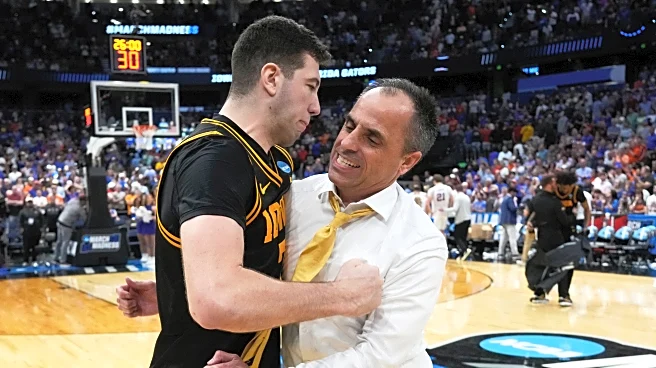
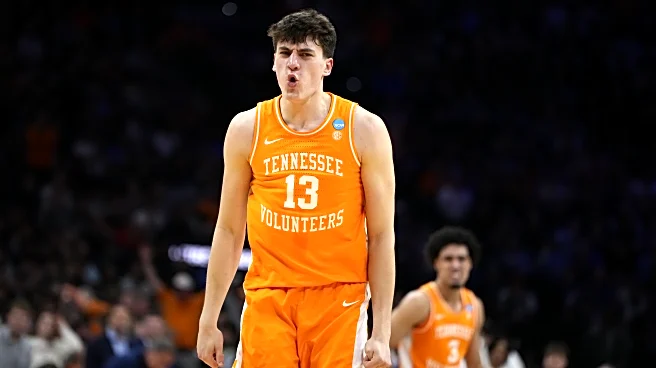
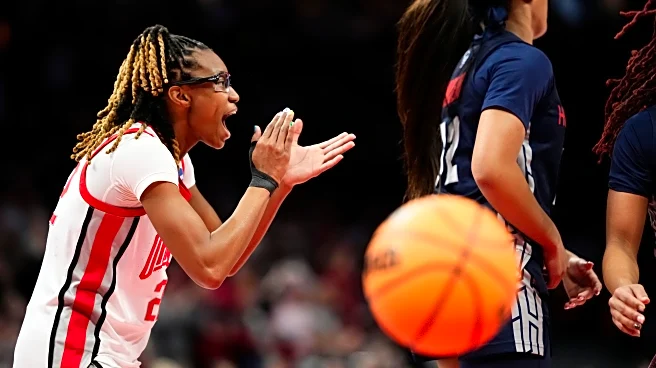
of the day, but this number dwindled significantly after several upsets. Notably, No. 10 seed Virginia defeated No. 2 Iowa in double overtime, and No. 6 seed Notre Dame overcame No. 3 Ohio State, leaving just one perfect bracket. On the men's side, the quest for a perfect bracket ended when No. 6 seed Tennessee beat No. 3 seed Virginia, and No. 9 seed Iowa upset No. 1 seed Florida. The odds of maintaining a perfect bracket throughout the tournament are astronomically low, estimated between one in 9.2 quintillion for random guesses and one in 120 billion for educated guesses.
Why It's Important?
The rarity of a perfect bracket highlights the unpredictability and excitement of the NCAA Tournament, often referred to as March Madness. This phenomenon captivates millions of fans and participants who engage in bracket challenges, making it a significant cultural event in the U.S. The presence of a single perfect bracket entering the Sweet 16 underscores the difficulty of predicting outcomes in a tournament known for its upsets and surprises. This event not only fuels interest and engagement among sports fans but also drives media coverage and discussions around college basketball, impacting viewership and advertising revenues.
What's Next?
As the tournament progresses, the remaining perfect bracket will be closely watched by fans and analysts alike. The Sweet 16 matchups will further test the accuracy of this bracket, with potential upsets and close games likely to challenge its perfection. The outcome of these games will determine whether the perfect bracket can survive another round, maintaining its status as a statistical anomaly. Additionally, the continued interest in this bracket could influence participation in future bracket challenges, as fans seek to replicate the success of predicting tournament outcomes.