







What's Happening?
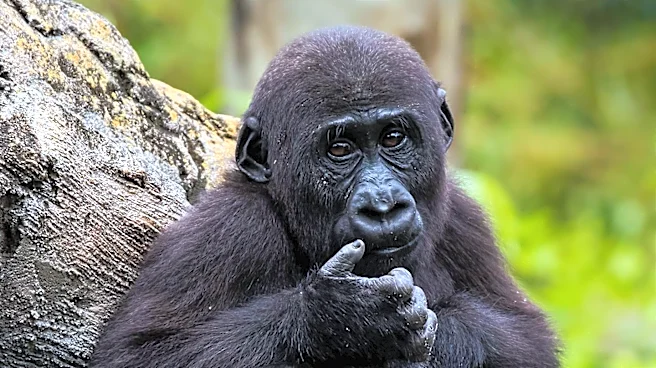
Fatou, the world's oldest gorilla in captivity, celebrated her 69th birthday at the Berlin Zoo with a vegetable feast and recognition from Guinness World Records. Fatou, a western lowland gorilla, was brought to France in the late 1950s and later sold
to the Berlin Zoo, where she has lived for over six decades. Despite health challenges such as arthritis and weakened eyesight, Fatou continues to captivate visitors with her dignified manner. Her longevity surpasses the typical life expectancy of gorillas in the wild, which is around 40 years. Fatou's story highlights the changes in zoo practices over the years, with modern zoos focusing on conservation and the well-being of animals.
Why It's Important?
Fatou's remarkable age serves as a testament to the advancements in animal care and conservation efforts within zoos. Her story underscores the importance of preserving endangered species like the western lowland gorilla, which faces threats from climate change, poaching, and habitat loss. As an ambassador for her species, Fatou helps raise awareness about the critical need for conservation efforts. Her presence at the Berlin Zoo offers visitors a personal connection to wildlife, emphasizing the role of zoos in education and advocacy for endangered animals. The celebration of her birthday also highlights the evolving practices in zoos, which now prioritize animal welfare and conservation over capturing animals from the wild.
Beyond the Headlines
Fatou's life story reflects broader ethical considerations in wildlife conservation and the role of zoos in modern society. Her longevity and care at the Berlin Zoo demonstrate the potential for zoos to contribute positively to conservation efforts, providing safe havens for endangered species and educating the public about the importance of biodiversity. The shift from capturing animals to focusing on their conservation represents a significant cultural and ethical evolution in how humans interact with wildlife. Fatou's story may inspire further discussions on the responsibilities of zoos and the need for global cooperation in protecting vulnerable species.