





What's Happening?
Kubota Corporation has strengthened its partnership with Agtonomy, a U.S.-based startup, by making a strategic investment aimed at advancing automation systems for precision agriculture. This collaboration, which began in 2024, focuses on integrating
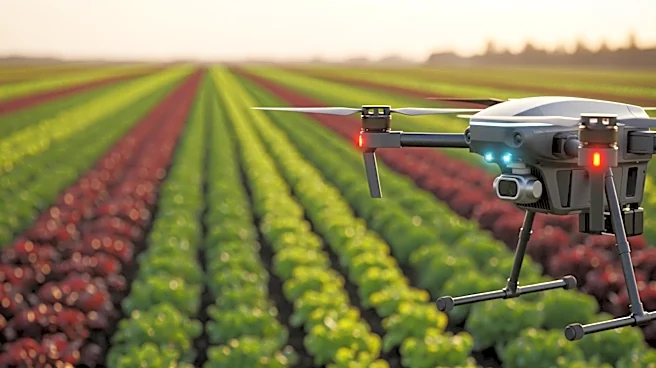
modern automation technologies with reliable agricultural machinery to improve farming operations for specialty crops such as fruits, vegetables, and nuts. These crops are predominantly grown in California, Oregon, and Washington, where farmers face challenges like rising input costs and labor shortages. Agtonomy's technology aims to address these issues by enhancing precision and productivity in farming tasks. A significant milestone in this partnership was the demonstration of Kubota's autonomous M5 Narrow tractor equipped with Agtonomy's driving system at CES 2026, showcasing the practical application of automation in agriculture.
Why It's Important?
The partnership between Kubota and Agtonomy is significant as it addresses critical challenges faced by farmers in the U.S., particularly in the specialty crop sector. By integrating automation, the collaboration aims to reduce labor dependency and improve efficiency, which is crucial given the current labor shortages and increasing costs. This move not only supports sustainable farming practices but also enhances the competitiveness of U.S. agriculture in the global market. The introduction of advanced technologies can lead to more consistent and higher-quality crop production, benefiting both farmers and consumers.
What's Next?
Following the successful demonstration of their technology, Kubota and Agtonomy plan to expand the availability of their automation solutions through Kubota's dealer network across the western United States. This expansion is expected to increase the adoption of smart farming practices, potentially leading to further innovations in agricultural technology. Stakeholders, including farmers and agricultural businesses, are likely to monitor the impact of these technologies on productivity and cost-efficiency closely.