





What's Happening?
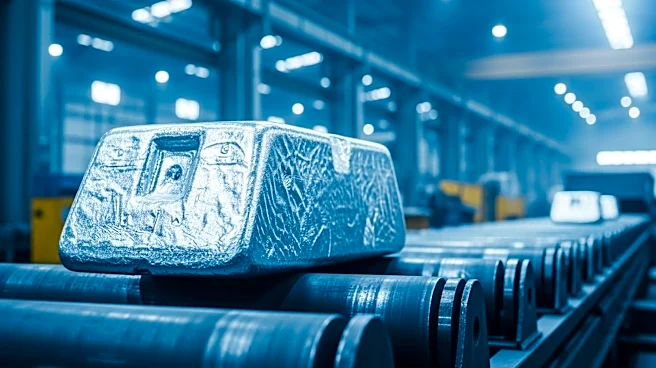
U.S. raw steel production has shown a significant increase, reaching 1.872 million net tons in the week ending May 30, 2026. This marks an 8.8% rise compared to the same week in 2025, when production was at 1.720 million net tons. The capacity utilization
rate also improved to 81.1% from 76.6% the previous year. The Southern district led production with 848,000 net tons, followed by the Great Lakes and Midwest regions. Year-to-date production as of May 30, 2026, totaled 38.925 million net tons, a 6.8% increase from the previous year. This growth is attributed to robust demand in major manufacturing sectors.
Why It's Important?
The increase in steel production is a positive indicator for the U.S. manufacturing sector, suggesting strong demand and economic activity. Higher production levels can lead to job creation and economic growth, benefiting industries reliant on steel, such as construction and automotive. The improved capacity utilization rate indicates efficient use of resources, which can enhance competitiveness in the global market. This growth also reflects the resilience of the U.S. steel industry amidst global economic challenges, potentially leading to increased investments and expansion in the sector.
What's Next?
Continued monitoring of production trends and capacity utilization rates will be crucial for stakeholders in the steel industry. Potential challenges include maintaining production efficiency and managing input costs. The industry may also face regulatory changes and trade dynamics that could impact future growth. Companies might explore technological advancements and sustainable practices to enhance production capabilities and meet environmental standards. Strategic planning and market analysis will be essential for navigating these developments and capitalizing on growth opportunities.
Beyond the Headlines
The steel industry's growth could have broader implications for U.S. trade policies and international relations, particularly with countries that are major steel producers. The focus on sustainable practices may drive innovation and lead to long-term shifts in production methods. Additionally, the industry's performance could influence policy decisions related to infrastructure development and economic recovery efforts. Understanding these dynamics will be important for policymakers and industry leaders as they plan for future challenges and opportunities.