
What's Happening?
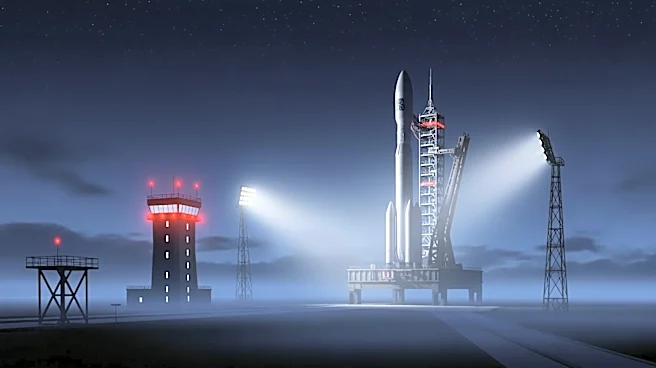
Blue Origin's New Glenn rocket, owned by Jeff Bezos, exploded during a static fire test at Cape Canaveral, Florida. This incident occurred ahead of the rocket's fourth scheduled flight, marking a significant
setback for the company. The explosion may lead to a suspension of the New Glenn program, which had planned up to 12 launches this year. The rocket was also expected to play a crucial role in NASA's Artemis lunar missions. This follows a previous failure where the rocket's upper stage did not deploy a satellite, leading to a total mission loss. The Federal Aviation Administration (FAA) had only recently authorized the resumption of flights after investigating the earlier failure.
Why It's Important?
The explosion of the New Glenn rocket is a major blow to Blue Origin's efforts to compete with Elon Musk's SpaceX, particularly in the lucrative space launch market. The setback could delay NASA's Artemis missions, which rely on the New Glenn for lunar exploration. This incident highlights the challenges faced by private space companies in developing reliable heavy-lift launch capabilities. The competition between Blue Origin and SpaceX is intense, with both companies vying for contracts and technological advancements in space exploration. The failure could impact Blue Origin's reputation and its ability to secure future contracts.
What's Next?
Blue Origin will likely conduct a thorough investigation to determine the cause of the explosion. The company will need to address any technical issues before resuming the New Glenn program. NASA and other stakeholders will be closely monitoring the situation, as the rocket's reliability is crucial for upcoming missions. The delay could provide SpaceX with a competitive edge, as it continues to develop its own heavy-lift capabilities. Blue Origin's response and ability to recover from this setback will be critical in maintaining its position in the space industry.