



What's Happening?
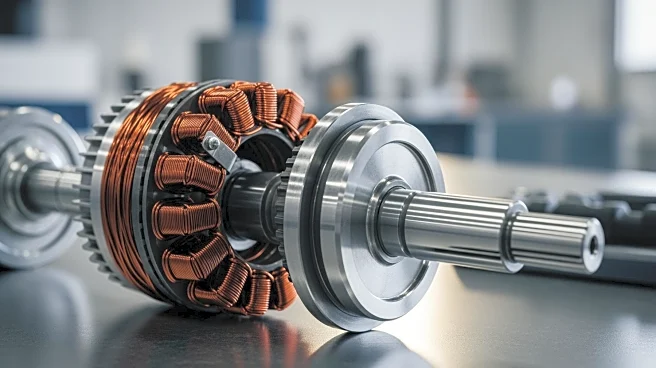
The United States is facing a significant challenge in its industrial strategy, particularly in the manufacturing of motors and drives that utilize rare-earth magnets. Despite efforts to secure rare-earth supply chains, the U.S. has not developed sufficient
domestic capacity to produce high-value components like traction motors for electric vehicles and generators for wind turbines. These components are crucial for the performance and efficiency of electrified systems. Currently, the U.S. relies heavily on imports for these components, as the most advanced materials required for their production are primarily manufactured in countries like Japan, Korea, and Europe. This reliance creates a bottleneck in the supply chain, hindering the U.S.'s ability to fully capitalize on its rare-earth resources.
Why It's Important?
The lack of domestic manufacturing capacity for motors and drives poses a strategic risk to the U.S. economy and its clean energy goals. As global demand for electrified systems grows, the U.S. risks falling behind in the production of these critical components, which could lead to increased dependency on foreign suppliers. This dependency not only affects economic competitiveness but also national security, as the ability to produce these components domestically is crucial for energy independence and technological leadership. Addressing this gap is essential for the U.S. to maintain its position in the global market and to ensure the resilience of its supply chains.
What's Next?
To address these challenges, the U.S. could implement policies that incentivize the domestic production of motors and drives. This includes adapting successful strategies from the battery industry, such as production tax credits and local-content requirements, to encourage the manufacturing of complete drive units domestically. Additionally, federal procurement policies could prioritize high-efficiency, domestically manufactured motor-drive systems. By focusing on building the entire supply chain within the U.S., the country can reduce its reliance on imports and strengthen its industrial base.