
What's Happening?
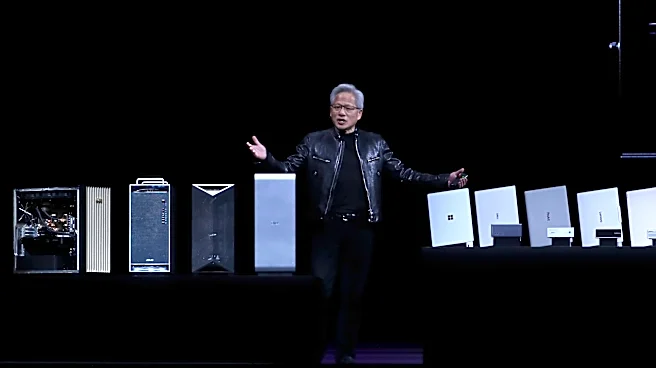
Nvidia CEO Jensen Huang announced the launch of the RTX Spark chip at Computex, designed to enable AI agents to run natively on personal computers. This development marks Nvidia's expansion from data center
chips to personal computing, positioning it against competitors like Intel and AMD. The chip allows AI tasks to be performed directly on devices, offering privacy and speed benefits. Huang emphasized the transformative potential of this technology, likening it to the evolution of smartphones. Nvidia is also focusing on building AI infrastructure, unveiling the Nvidia DSX framework for AI factory operations.
Why It's Important?
Nvidia's move to bring AI capabilities to personal computers could significantly impact the tech industry, potentially reshaping how AI is integrated into everyday computing. This shift could drive demand for more advanced personal computing devices and software, influencing market dynamics and competition among major tech companies. The emphasis on local AI processing addresses privacy concerns and could lead to new applications and efficiencies in personal and professional settings. Nvidia's strategy to build comprehensive AI infrastructure highlights the growing importance of AI in driving technological and economic advancements.
What's Next?
As Nvidia rolls out the RTX Spark chip, the company may face increased competition from established players in the personal computing market. The success of this initiative could depend on the adoption rate by consumers and businesses, as well as the development of compatible software and applications. Nvidia's focus on AI infrastructure suggests a long-term commitment to expanding its role in the AI ecosystem, potentially influencing future innovations and partnerships in the tech industry.