





What's Happening?
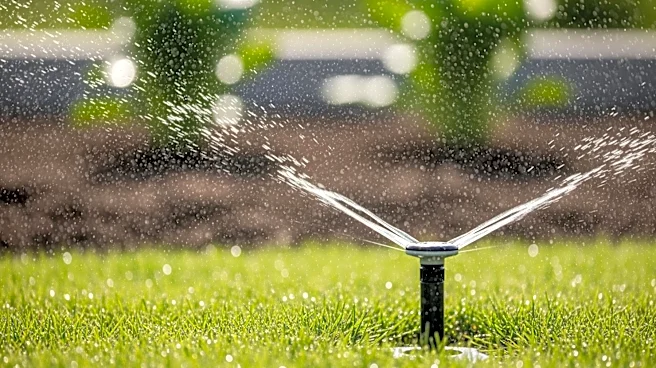
Israeli startup BSprinkler has developed a new sprinkler system designed to minimize water waste by dynamically adjusting its range during rotation to match the exact shape of an area. This innovation comes as water scarcity becomes a pressing global
issue, exacerbated by climate change, population growth, and aging infrastructure. Agriculture, which accounts for approximately 70% of global freshwater use, is at the center of this crisis, with significant water loss occurring due to inefficient irrigation systems. BSprinkler's technology aims to address these inefficiencies by replacing multiple conventional units with a single sprinkler that prevents overlap and reduces water usage. The system operates without electricity or electronics, using a mechanical memory to retain settings. The company has already sold close to 200,000 units of earlier versions, primarily in the United States, and is now focusing on integrating its technology into mainstream irrigation systems.
Why It's Important?
The development of BSprinkler's water-saving technology is significant as it addresses the urgent need for more efficient water use in agriculture, a sector heavily reliant on freshwater resources. As global demand for freshwater is projected to exceed supply by up to 40% by 2030, innovations that reduce water waste are crucial for ensuring food security and economic stability. By improving irrigation efficiency, BSprinkler's system can help mitigate the impact of prolonged droughts and heatwaves, which are increasingly common due to climate change. This technology not only supports sustainable agricultural practices but also aligns with broader efforts to enhance resource management and environmental conservation.
What's Next?
BSprinkler's focus on integrating its technology into mainstream irrigation systems suggests potential expansion and increased adoption in urban and residential landscaping. As governments and industries continue to seek solutions for water management, mechanical innovations like BSprinkler's may gain further attention for their simplicity and cost-effectiveness. The company's success in commercial validation and international distribution indicates a promising future for its technology, which could play a central role in addressing the widening gap between water supply and demand.