
What's Happening?
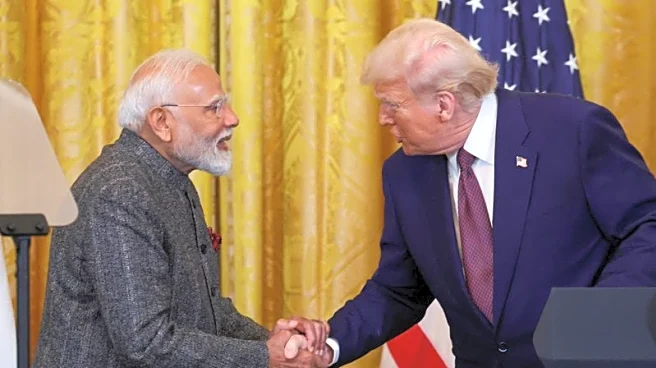
India and the United States have announced an interim trade framework aimed at enhancing economic ties between the two nations. This framework is designed to reduce trade barriers and expand market access
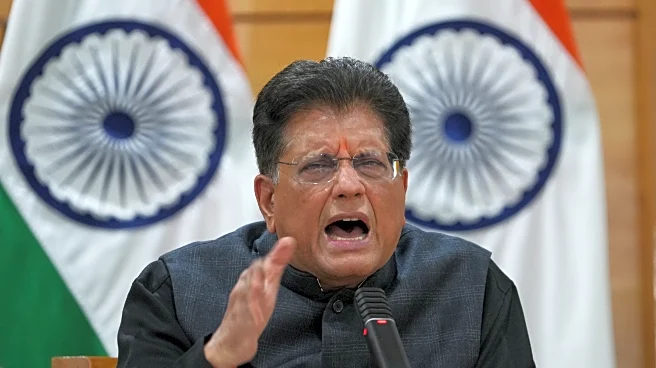
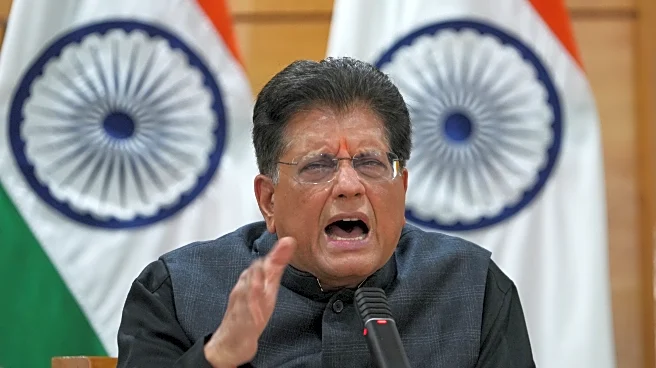
while safeguarding India's sensitive agriculture and dairy sectors. The agreement does not include tariff cuts on major farm products such as wheat, rice, poultry, and dairy, ensuring the protection of Indian farmers' livelihoods. Union Commerce Minister Piyush Goyal emphasized that the deal will open a $30 trillion market for Indian exporters, particularly benefiting MSMEs, farmers, and fishermen. The United States has agreed to lower reciprocal tariffs on Indian goods to 18%, which is expected to make Indian exports more competitive in the US market.
Why It's Important?
The interim trade framework is significant as it represents a strategic effort to deepen economic cooperation between India and the United States. By protecting sensitive agricultural sectors, the agreement addresses domestic political concerns in India and ensures food security. The reduction in tariffs on Indian goods is expected to boost exports in sectors such as textiles, pharmaceuticals, and engineering goods, creating new job opportunities. This framework also lays the groundwork for future cooperation on digital trade and supply chains, with hopes of finalizing a full Bilateral Trade Agreement in the coming months. The deal reflects a shared commitment to sustainable growth and economic engagement between the two democracies.
What's Next?
The interim framework is a precursor to a more comprehensive trade agreement expected to be signed in March 2026. This future agreement aims to further expand market access and address non-tariff barriers affecting bilateral trade. Political leaders and industry stakeholders will likely continue to monitor the impact of the agreement on domestic markets, particularly in the agriculture sector. The ongoing negotiations will focus on ensuring that the benefits of the agreement are mutually advantageous, with both countries working to resolve long-standing trade concerns.