






What's Happening?
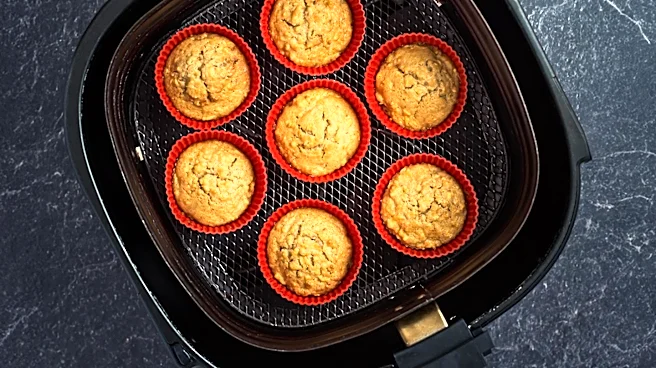
The popularity of air fryers has raised concerns about the health risks associated with nonstick baskets, particularly the potential for 'Teflon Flu.' This condition, also known as polymer fume fever, occurs when fumes from overheated Teflon or similar
nonstick coatings are inhaled. While these coatings are generally safe when used properly, overheating can lead to the release of toxic fumes. Most air fryers are designed not to exceed 450°F, minimizing this risk. However, the market is seeing a shift towards air fryers with baskets made from glass or ceramic, which do not contain PFAS, a group of chemicals associated with health risks.
Why It's Important?
The health implications of using nonstick cookware are significant, as they can affect a large portion of the population given the widespread use of air fryers. Understanding the risks associated with Teflon and similar coatings is crucial for consumer safety. The move towards non-toxic materials in kitchen appliances reflects a broader trend in consumer demand for safer, more sustainable products. This shift could lead to changes in manufacturing practices and increased regulation of chemical coatings in cookware, impacting both consumers and manufacturers.
What's Next?
As awareness of the potential health risks of nonstick coatings grows, consumers may increasingly opt for air fryers with alternative materials. Manufacturers are likely to continue developing and promoting products that use safer materials, such as glass and ceramic. This trend could also lead to more stringent regulations on the use of PFAS in consumer products. Consumers are advised to follow best practices for using nonstick cookware, such as avoiding high temperatures and using soft utensils to prevent damage to the coating.