What's Happening?
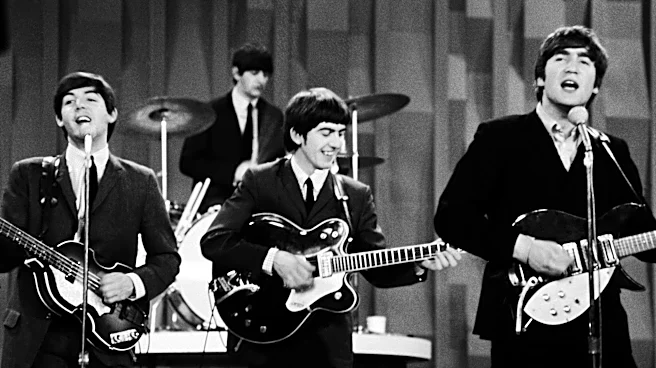
Paul McCartney, a legendary figure in rock and roll, continues to redefine his musical legacy well into his eighties. A recent review of Jim Windolf's book, 'Where the Music Had to Go,' highlights how
McCartney, along with Bob Dylan, has maintained a dedication to art that transcends the typical lifespan of a rock career. The book explores the transformation of rock and roll from mere entertainment to a respected art form, emphasizing the influence of artists like Dylan and the Beatles on each other and the world. McCartney's recent performances, including his 'Got Back Tour,' showcase a blend of nostalgia and innovation, as he revisits classic Beatles songs while infusing them with new meaning. This approach aligns with the concept of 'late style,' where artists reinterpret their work through the lens of age and experience.
Why It's Important?
The continued artistic output of figures like McCartney and Dylan underscores the evolving nature of rock and roll as a cultural force. Their ability to adapt and reinterpret their music speaks to the genre's resilience and its capacity to address themes of memory, loss, and perseverance. This evolution challenges the notion that rock music is solely the domain of youth, instead presenting it as a lifelong creative journey. For the music industry, this highlights the potential for artists to remain relevant and influential well into their later years, offering a model for longevity in a field often dominated by trends and youth culture.
What's Next?
As McCartney and Dylan continue to perform and release new work, they set a precedent for other aging artists to follow. Their careers suggest that the music industry may increasingly embrace older artists who bring a wealth of experience and a fresh perspective to their craft. This could lead to a broader acceptance of 'late style' as a legitimate and valuable phase in an artist's career, encouraging more musicians to explore new creative directions as they age.
Beyond the Headlines
The concept of 'late style' in rock and roll also raises questions about the nature of legacy and artistic ownership. As artists like McCartney reinterpret their past work, they challenge the static perception of their contributions to music history. This dynamic approach to legacy suggests that artists have the right to redefine their impact and influence, regardless of public or critical expectations. It also highlights the personal and emotional dimensions of artistic expression, as musicians grapple with themes of aging and mortality through their work.