




What's Happening?
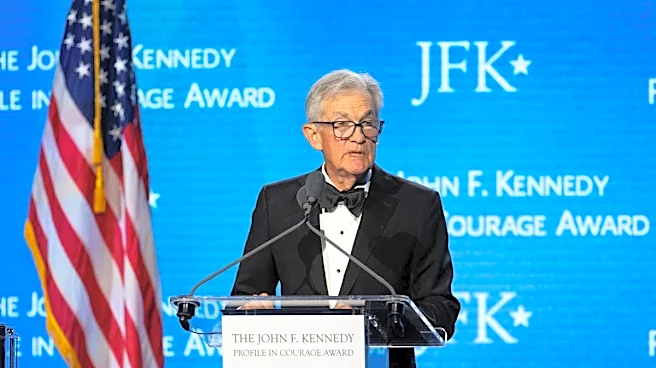
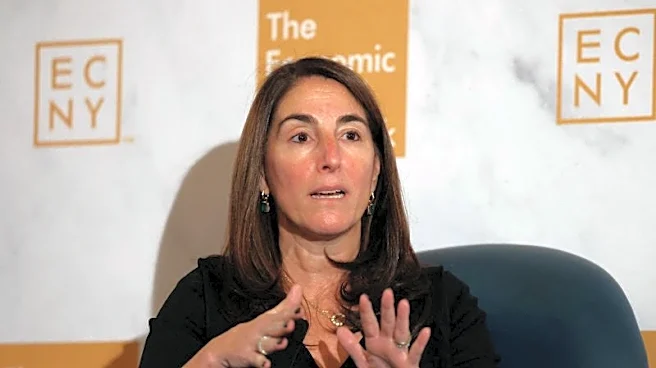
John Williams, President of the Federal Reserve Bank of New York, stated in an interview that the current U.S. monetary policy is appropriately positioned despite inflation risks linked to geopolitical tensions in the Middle East. Williams emphasized
that there is no immediate need to adjust short-term interest rates, as the current economic indicators do not suggest a clear direction for future rate changes. His comments come amid ongoing discussions about the potential impact of external factors on the U.S. economy, including inflationary pressures.
Why It's Important?
Williams' remarks provide insight into the Federal Reserve's approach to managing economic stability in the face of inflation risks. By maintaining the current interest rate policy, the Fed aims to balance economic growth with inflation control. This stance is crucial for financial markets, businesses, and consumers, as interest rates influence borrowing costs, investment decisions, and consumer spending. The Fed's position also reflects its confidence in the resilience of the U.S. economy despite external challenges, which could reassure stakeholders concerned about potential economic disruptions.
What's Next?
The Federal Reserve will continue to monitor economic indicators and geopolitical developments to assess the need for any policy adjustments. Stakeholders, including investors and policymakers, will be attentive to future Fed communications for any signals of a shift in monetary policy. The ongoing evaluation of inflation risks and economic performance will be critical in shaping the Fed's decisions, with potential implications for financial markets and economic growth.