








What's Happening?
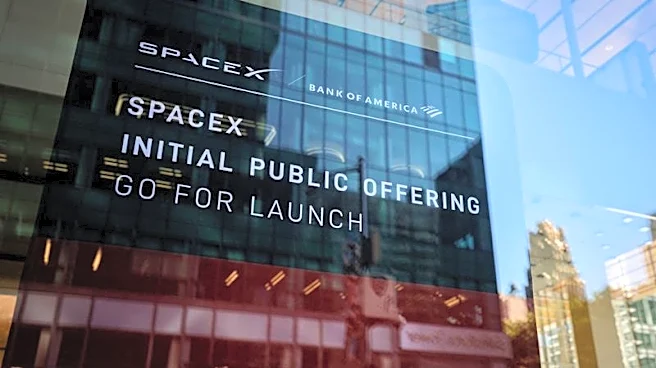
SpaceX, officially known as Space Exploration Technologies, has made its debut on the Nasdaq stock exchange with a remarkable market capitalization of approximately $2.1 trillion. The initial public offering (IPO) was priced at $135 per share, but shares
surged by 25% to reach about $175 during the first day of trading, closing at $160.95. This significant increase reflects strong investor confidence in SpaceX's leadership in space exploration, satellite networks, and the burgeoning artificial intelligence sector. The enthusiasm from both retail and institutional investors underscores the high demand for shares in what is perceived as a category-defining company.
Why It's Important?
The public offering of SpaceX marks a pivotal moment in the financial markets, as it becomes one of the most valuable companies globally. This event highlights the growing investor interest in companies that are at the forefront of technological innovation and space exploration. The substantial valuation and initial trading surge suggest a robust belief in SpaceX's potential to drive future growth and innovation. However, the high valuation also sets elevated expectations, which could lead to increased volatility in the stock's performance. The IPO serves as a real-time indicator of market optimism and the appetite for investing in transformative technologies.
What's Next?
As SpaceX navigates its journey as a publicly traded company, investors will closely monitor its ability to sustain its premium valuation. The company's performance in the coming months will be critical in determining whether it can meet the high expectations set by its initial market debut. Analysts and investors will likely focus on SpaceX's strategic initiatives in space exploration and AI, as well as its financial performance, to assess its long-term value creation potential. The broader market will also watch for any shifts in investor sentiment that could impact the stock's volatility.