

What's Happening?
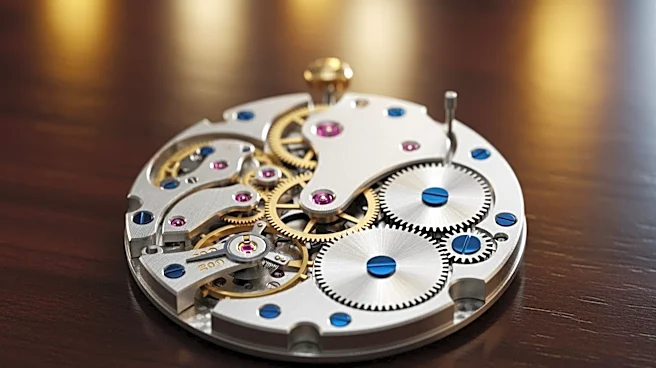
The global luxury watch market is undergoing a significant transformation, moving from a focus on mass production to prioritizing high-value products. According to a report by Strategic Gears, Swiss watch manufacturers have halved their output since 2000,
yet export revenue has nearly tripled, rising from $12 billion to $31 billion. This shift highlights a decoupling of volume and value, as brands focus on capturing more value per unit sold. The luxury tier, defined as watches priced above $3,825, now accounts for 80% of Swiss export value, a sharp increase from 34% in 2000. The market for more affordable timepieces has collapsed, with their share of export value dropping from 25% in 2000 to just 5% in 2025. The industry is currently dominated by five major brands, including Rolex and Cartier, which together hold 61% of the market share.
Why It's Important?
This recalibration in the luxury watch market reflects broader economic trends and consumer behaviors. The focus on high-value products and the persistence of secondary market premiums indicate a shift towards engineered scarcity and high demand. This trend is significant for the U.S. market, where 70% of the demand base for luxury watches is located. The recalibration also mirrors challenges faced by other luxury sectors, such as cars and beauty products, which are experiencing slowed growth due to geopolitical risks and inflation. The strategic choices made by watch brands, such as expanding into certified pre-owned programs and leveraging AI for buyer data, could influence their financial and reputational capital in a shifting global economy.
What's Next?
As the luxury watch industry navigates this period of recalibration, brands are expected to focus on strategic priorities that balance short-term revenue with long-term reputation. The industry is likely to see continued emphasis on high-value products and secondary market dynamics. Companies may also explore new distribution and marketing strategies to adapt to changing market conditions. The ongoing geopolitical uncertainty and tighter liquidity conditions will likely influence the industry's trajectory, requiring careful market analysis and strategic planning by watchmakers.