
What's Happening?
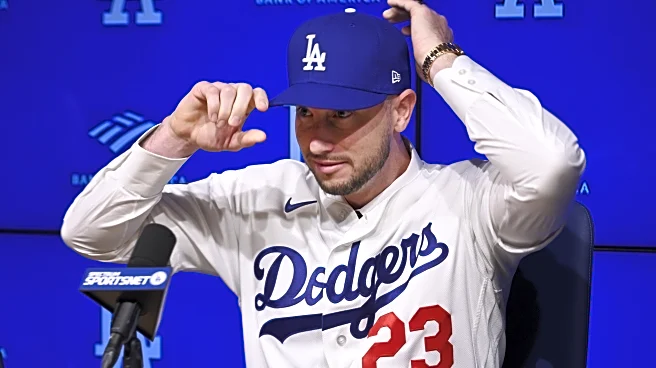
Kyle Tucker, a prominent baseball player, has signed a four-year, $240 million contract with the Los Angeles Dodgers. This deal makes Tucker one of the highest-paid players in Major League Baseball, with an
annual salary of $60 million. Tucker, who previously played for the Houston Astros and the Chicago Cubs, has been a consistent performer, boasting 22 home runs and 25 steals in the 2025 season. The Dodgers' acquisition of Tucker is part of their ongoing strategy to strengthen their roster, following previous high-profile signings such as Shohei Ohtani and Mookie Betts. Despite facing competition from other teams like the New York Mets, the Dodgers secured Tucker's services, further solidifying their position as a powerhouse in the league.
Why It's Important?
The signing of Kyle Tucker by the Dodgers is significant for several reasons. Firstly, it underscores the Dodgers' financial prowess and their commitment to maintaining a competitive edge in Major League Baseball. By securing a player of Tucker's caliber, the Dodgers enhance their chances of continued success in future seasons. This move also highlights the growing trend of short-term, high-value contracts in baseball, which can offer players greater flexibility and financial security. For the league, Tucker's deal may influence future negotiations and player valuations, potentially leading to shifts in how teams approach free agency and player retention.
What's Next?
With Tucker now part of the Dodgers, the team is expected to focus on integrating him into their lineup and maximizing his impact on the field. The Dodgers will likely continue to explore additional roster enhancements to maintain their competitive advantage. For Tucker, the contract includes opt-out clauses after the second and third years, providing him with options to renegotiate or explore free agency again, depending on his performance and market conditions. The broader baseball community will be watching closely to see how this deal influences other player contracts and team strategies in the coming years.