
What's Happening?
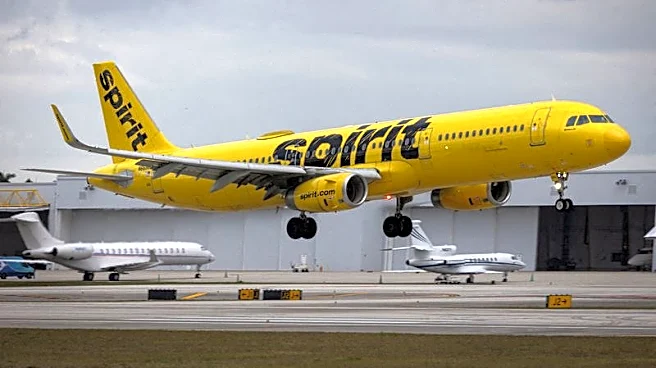
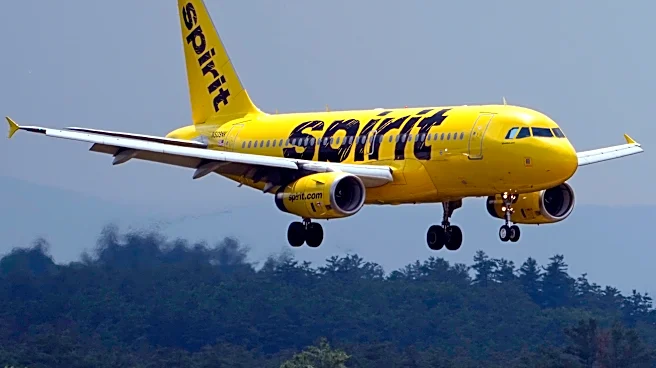
Spirit Airlines is on the brink of liquidation after failing to secure a $500 million bailout from the Trump administration. The airline, which pioneered the low-cost budget model, has been struggling
with rising costs, changing consumer preferences, and an engine recall. The surge in fuel prices following the U.S.-Israel strikes on Iran has further strained Spirit's finances. Despite a 'final' bailout proposal from the Trump administration, negotiations with bondholders have not resulted in a deal. Spirit's cash reserves are dwindling, and the airline's lawyer has indicated that its financial situation is dire.
Why It's Important?
The potential shutdown of Spirit Airlines could have far-reaching effects on the U.S. aviation market. As a major player in the budget airline sector, Spirit's exit could lead to reduced competition and higher airfares, impacting consumers who rely on affordable travel options. The airline's closure would also result in significant job losses and economic disruption in the regions it serves. The situation highlights the challenges faced by budget carriers in maintaining profitability amid rising operational costs and competitive pressures. It also underscores the complexities of government intervention in private sector bailouts.
What's Next?
If Spirit Airlines ceases operations, other airlines are likely to step in to fill the void, potentially leading to increased consolidation in the industry. The Trump administration's decision on the bailout could set a precedent for future government assistance to struggling companies. The outcome of this situation will be closely monitored by industry stakeholders, policymakers, and consumers. The aviation sector may undergo significant changes as airlines adjust to the new market dynamics.