





What's Happening?
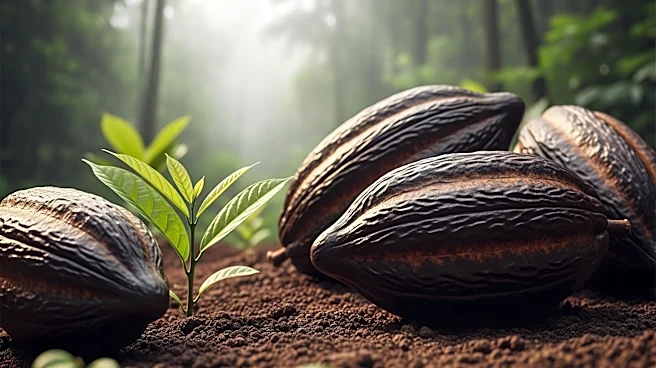
Celleste Bio, a start-up focused on cultivating cocoa ingredients, is advancing its technology to produce cocoa butter through cell cultivation. This process involves fermenting cocoa cells with water, sugar, and vitamins to grow biomass, which is then
separated into butter and powder. The company, led by CEO Michal Beressi Golomb, operates under challenging conditions in Israel, where missile threats are a constant concern. Despite these challenges, Celleste Bio is committed to addressing the cocoa supply crisis exacerbated by climate change, aging farms, and deforestation. The company aims to supplement traditional cocoa production, not replace it, by providing a sustainable alternative to meet growing demand.
Why It's Important?
The development of cultivated cocoa is crucial as the traditional cocoa industry faces significant challenges, including supply shortages and price volatility. These issues are driven by environmental factors and increased demand, which threaten the sustainability of cocoa production. Celleste Bio's innovation offers a potential solution to these problems by providing a stable and sustainable source of cocoa butter. This advancement could help stabilize the chocolate industry, ensuring continued availability of chocolate products and supporting the livelihoods of those dependent on cocoa farming. The success of such innovations could also encourage further investment in food biotechnology, promoting sustainability in other agricultural sectors.
What's Next?
Celleste Bio is moving towards commercial readiness, with plans to provide samples to potential customers soon. The company is also preparing regulatory dossiers for approval in the U.S., EU, Israel, and the UK. Achieving regulatory approval is a significant hurdle, but collaboration between regulators and innovators could expedite the process. Once approved, the company will need to address consumer acceptance of cell-based cocoa products. If successful, Celleste Bio's approach could set a precedent for other food biotechnology innovations, potentially transforming the industry and encouraging sustainable practices.
Beyond the Headlines
The development of cell-based cocoa raises important questions about the future of food production and sustainability. It highlights the potential for biotechnology to address global food supply challenges while reducing environmental impact. However, it also underscores the need for regulatory frameworks that can keep pace with technological advancements. Additionally, consumer perceptions of lab-grown food products will play a critical role in their market success. As the industry evolves, ethical considerations regarding the balance between innovation and traditional farming practices will need to be addressed.