





What's Happening?
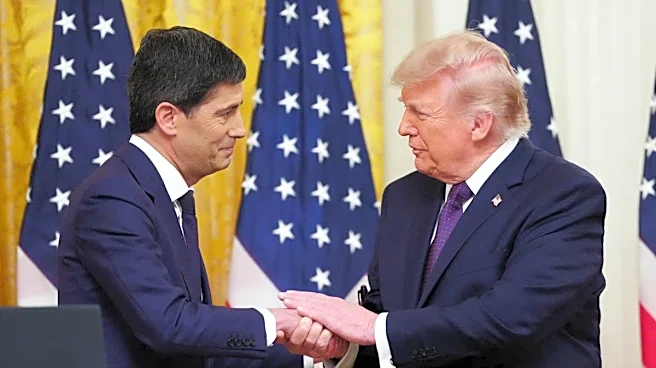
Kevin Warsh has been officially sworn in as the new Chairman of the Federal Reserve, marking the first time since 1987 that a Fed chair has been sworn in at the White House. The ceremony took place in the East Room, with U.S. Supreme Court Associate Justice
Clarence Thomas administering the oath. President Trump, who was present at the event, emphasized the importance of Warsh's independence, urging him to 'just do your own thing.' However, at a subsequent rally, President Trump expressed his expectation for interest rates to decrease 'very quickly.' Warsh's appointment comes with promises of a 'regime change' at the Fed, which could involve reducing the central bank's role in financial markets and establishing clearer guidelines for intervention.
Why It's Important?
The appointment of Kevin Warsh as Federal Reserve Chair is significant for several reasons. His leadership could signal a shift in the Fed's approach to monetary policy, potentially impacting interest rates and financial market operations. President Trump's comments suggest a desire for lower interest rates, which could influence economic growth and inflation. Warsh's promise of a 'regime change' may lead to a more defined role for the Fed, affecting how it interacts with financial markets. This transition is crucial for investors, businesses, and policymakers who rely on the Fed's guidance for economic stability and growth.
What's Next?
As Kevin Warsh begins his tenure, stakeholders will closely monitor his policy decisions and their implications for the U.S. economy. The financial markets may react to any changes in interest rates or shifts in the Fed's market interventions. Additionally, Warsh's approach to maintaining independence from political pressures will be scrutinized, especially given President Trump's public expectations. The Fed's future actions under Warsh's leadership could influence economic conditions, including employment rates, inflation, and overall economic growth.