


What's Happening?
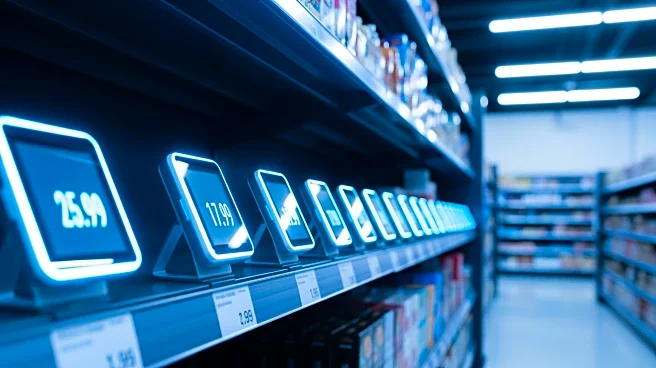
Walmart has announced plans to replace traditional paper price tags with digital price labels in all its U.S. stores by the end of 2026. This move aims to enhance efficiency and accuracy in pricing, aligning with the company's broader digital transformation
strategy. The digital shelf labels (DSLs) are expected to reduce the time employees spend on pricing tasks by 75%, allowing them to focus more on customer service. However, the introduction of DSLs has raised concerns among lawmakers about the potential for surge pricing. Critics argue that the technology could lead to price manipulation, prompting legislative efforts to ban DSLs in large grocery stores.
Why It's Important?
The shift to digital price tags represents a significant technological advancement in the retail sector, promising increased operational efficiency and improved customer experience. However, it also raises important regulatory and ethical questions about pricing transparency and consumer protection. The potential for dynamic pricing could lead to increased scrutiny from lawmakers and consumer advocacy groups, impacting how retailers implement such technologies. The outcome of this debate could set precedents for the use of digital pricing in other sectors, influencing future retail practices and consumer rights.
What's Next?
As Walmart and other retailers continue to roll out digital price tags, they may face increased pressure from lawmakers and consumer groups to ensure transparency and fairness in pricing. Legislative measures, such as the Stop Price Gouging in Grocery Stores Act, aim to establish guardrails to protect consumers from potential price manipulation. Retailers will need to navigate these regulatory challenges while demonstrating the benefits of digital pricing to gain consumer trust. The ongoing dialogue between retailers, lawmakers, and consumers will shape the future of digital pricing in the retail industry.