


What's Happening?
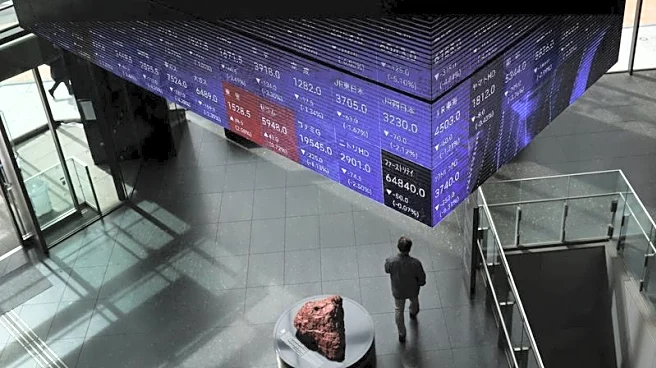
Bitcoin's price has recently exceeded its 50-day moving average, reaching $73,700, marking a significant bullish trend. This development follows a period of stable performance despite global market turmoil, particularly in Asian markets, and geopolitical
tensions such as the Iran war. The 50-day moving average is a critical momentum indicator, and surpassing it suggests a potential shift in the medium-term trend. Analysts, including Alex Kuptsikevich from FxPro, highlight that breaking this resistance level could signal a turning point, although past instances have shown mixed results. The current price movement suggests a possible continuation towards the $75,000 mark, which could increase market volatility as market makers adjust their positions.
Why It's Important?
The rise in Bitcoin's price above its 50-day average is significant for investors and the broader cryptocurrency market. It indicates renewed investor confidence and potential for further gains, which could attract more institutional and retail investors. The movement towards $75,000 is particularly noteworthy as it could lead to increased market activity and volatility, impacting trading strategies and liquidity. This development also reflects the resilience of cryptocurrencies amid geopolitical tensions and market instability, positioning Bitcoin as a potential safe-haven asset. The implications for financial markets are substantial, as increased volatility could affect related assets and investment strategies.
What's Next?
As Bitcoin approaches the $75,000 mark, market participants should prepare for potential volatility. Market makers, who provide liquidity, may need to adjust their positions, potentially leading to increased buying activity. Investors will be closely monitoring whether the bullish trend sustains or if a correction follows, as seen in previous instances. The cryptocurrency market's response to geopolitical developments and global economic conditions will also be crucial in determining Bitcoin's trajectory. Stakeholders, including institutional investors and trading platforms, will likely adjust their strategies to navigate the evolving market dynamics.