

What's Happening?
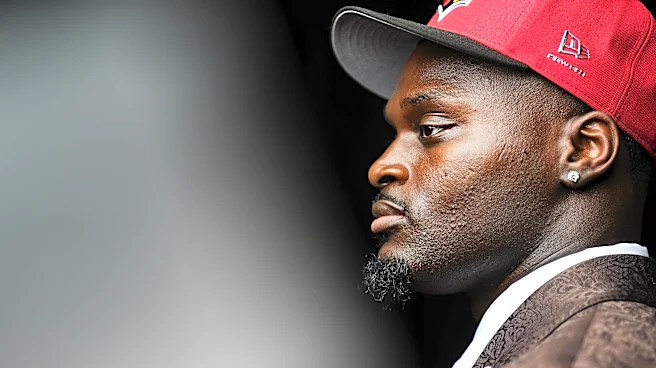
Michael Irvin, a former NFL player and University of Miami legend, has publicly criticized ESPN for what he describes as a 'classless' move during the 2026 NFL Draft. The controversy arose when ESPN displayed information about Rueben Bain Jr.'s arm length
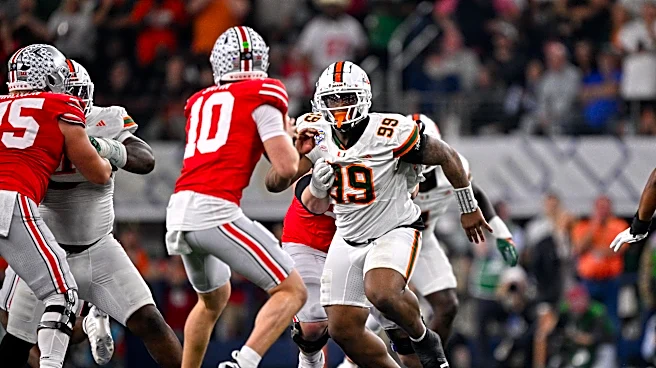
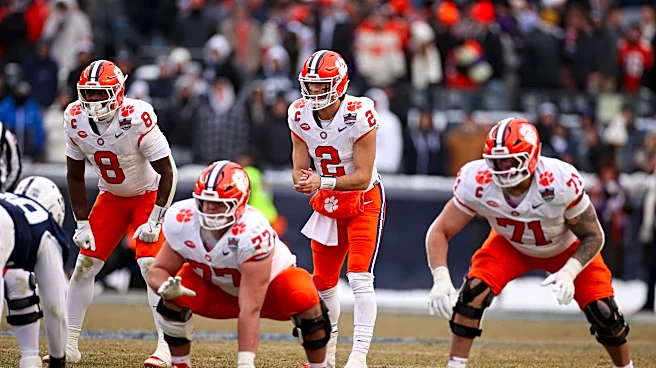
during his selection by the Tampa Bay Buccaneers as the 15th overall pick. Irvin expressed his disapproval on the show 'Outspoken with Dan Sileo,' arguing that the focus should have been on Bain's achievements rather than a perceived physical shortcoming. Bain, who had an impressive season with the Miami Hurricanes, was noted for his 9.5 sacks and was named ACC Defensive Player of the Year. Despite his accomplishments, Bain's arm length was highlighted as a potential concern for his NFL career, a point that Irvin believes overshadowed Bain's moment of triumph.
Why It's Important?
The incident underscores the ongoing debate about how media coverage can impact athletes' careers and public perception. Highlighting Bain's arm length during a pivotal career moment could influence how fans and teams perceive his potential, despite his proven track record. This situation raises questions about the role of media in shaping narratives around athletes, particularly during high-stakes events like the NFL Draft. For Bain, the focus on his physical attributes rather than his performance could affect his confidence and public image. For ESPN, the backlash from figures like Irvin may prompt a reevaluation of how they present information about athletes, balancing between informative content and respect for the individuals involved.
What's Next?
As Bain begins his career with the Buccaneers, he will have the opportunity to prove his critics wrong by demonstrating his skills on the field. The team and its coaching staff will likely focus on integrating Bain into their defensive strategies, emphasizing his strengths and addressing any perceived weaknesses. For ESPN, the criticism from Irvin and others may lead to internal discussions about their coverage strategies, particularly during high-profile events. The network might consider how to present athlete information in a way that is both informative and respectful, potentially adjusting their approach in future broadcasts.