
What's Happening?
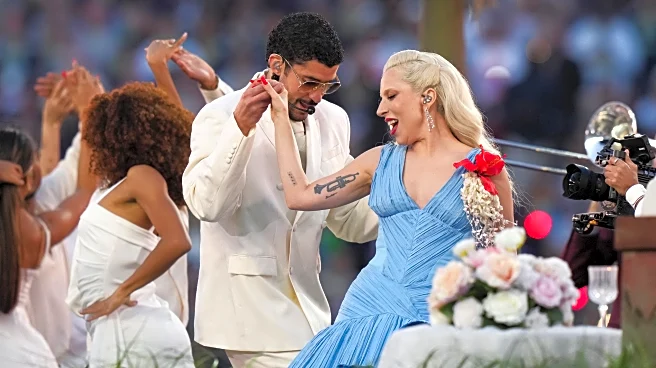
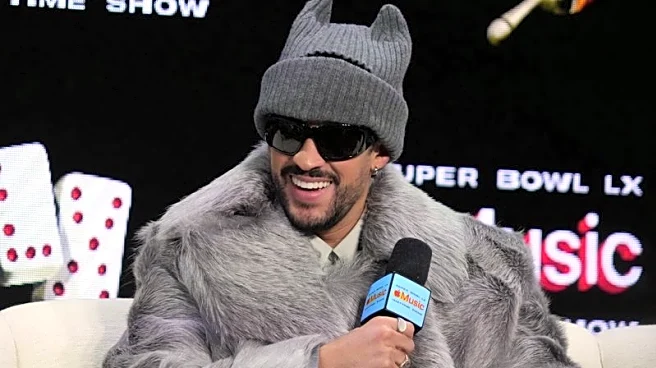
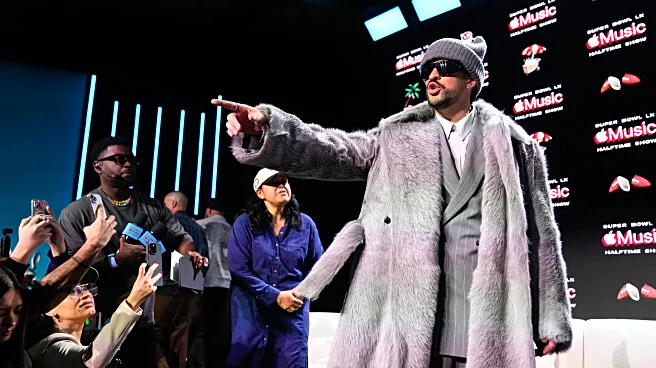
As the Super Bowl approaches, a cultural debate has emerged surrounding the inclusion of Spanish-language music in the halftime show, featuring global reggaeton star Bad Bunny. The discussion centers on cultural representation
and language, with some critics advocating for an 'all-American' alternative. This debate highlights the growing influence of Latin American artists in the U.S. music scene, as Bad Bunny continues to dominate global music charts. Fans of the artist argue that his performance is a reflection of the diverse cultural landscape in the United States, while opponents suggest that the halftime show should focus on American artists and traditions.
Why It's Important?
The inclusion of Bad Bunny in the Super Bowl halftime show underscores the increasing impact of Latin American culture in the United States. This event highlights the ongoing conversation about cultural representation in mainstream media and entertainment. The debate reflects broader societal discussions about diversity and inclusion, as well as the evolving definition of what constitutes 'American' culture. The outcome of this debate could influence future decisions regarding cultural representation in major U.S. events, potentially affecting how diverse communities are acknowledged and celebrated in national platforms.
What's Next?
As the Super Bowl approaches, reactions from various stakeholders, including fans, cultural commentators, and media outlets, will likely intensify. The NFL and event organizers may face pressure to address the concerns raised by both supporters and critics of the halftime show lineup. This could lead to further discussions about the criteria for selecting performers and the role of cultural diversity in such high-profile events. The response to Bad Bunny's performance may also set a precedent for future Super Bowl halftime shows and other major entertainment events in the U.S.