





What's Happening?
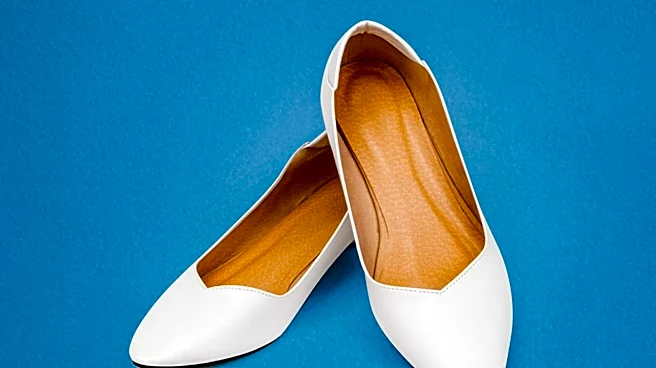
Jazz shoes, a style familiar to those with a background in dance or Broadway, are making a significant comeback in the fashion world. This resurgence is highlighted by their appearance on the Celine resort 2026 runway, part of Michael Rider's debut collection.
Other designers like Jil Sander, Dries Van Noten, and Bottega Veneta have also embraced this trend, showcasing leather lace-up flats in their collections. Historically, jazz shoes have been popularized by figures such as Serge Gainsbourg and Mick Jagger. The current revival is attributed to a broader trend towards soft, slipper-like footwear, which aligns with the 1980s aesthetic and current color trends. Fashion insiders and editors have been early adopters, particularly during Paris Fashion Week, indicating a growing popularity.
Why It's Important?
The resurgence of jazz shoes reflects a shift in consumer preferences towards comfort and style in footwear. As people seek versatile shoes that can accommodate active lifestyles, jazz shoes offer a blend of comfort and fashion. This trend also highlights a broader movement in the fashion industry towards 'freaky shoes,' which embrace unique and unconventional designs. The popularity of jazz shoes among fashion insiders suggests they may soon become a mainstream choice, influencing consumer purchasing decisions. This shift could impact footwear sales, as brands that adapt to these preferences may see increased demand.
What's Next?
As jazz shoes gain traction, more brands are likely to incorporate them into their collections, potentially leading to a wider variety of styles and price points. Fashion retailers may need to adjust their inventory to meet consumer demand for these shoes. Additionally, as the trend grows, it could influence other areas of fashion, encouraging designers to explore more unconventional and comfortable styles. The continued popularity of jazz shoes could also inspire new collaborations and innovations in footwear design.
Beyond the Headlines
The jazz shoe trend underscores a cultural shift towards valuing comfort and practicality in fashion. This change reflects broader societal trends where consumers prioritize functionality without sacrificing style. The trend also highlights the cyclical nature of fashion, where past styles are reimagined for contemporary audiences. As consumers become more discerning, the perceived value of fashion items, including their comfort and versatility, becomes crucial in purchasing decisions.