








What's Happening?
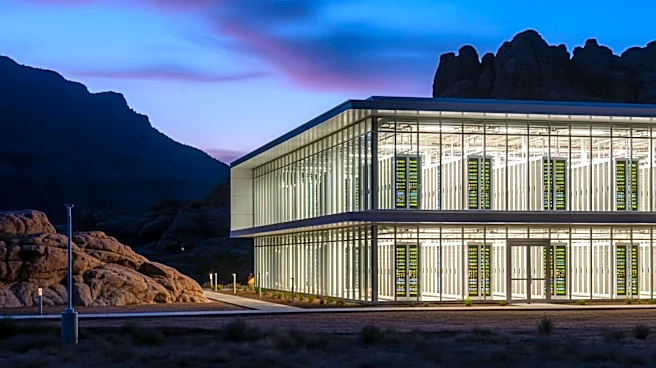
Kevin O'Leary, a prominent businessman and 'Shark Tank' star, is facing significant opposition from Utah residents over his plan to build a large data center in Box Elder County. The project, in partnership with Utah's Military Installation Development
Authority, aims to establish a multibillion-dollar data center across 40,000 acres. Local residents have expressed concerns about the environmental impact, particularly regarding water usage and noise pollution. Despite the remote location, the project has sparked protests, with residents fearing the ecological and energy demands of the center. O'Leary has responded by emphasizing the sustainability measures planned for the project, including a closed-loop cooling system to minimize water use.
Why It's Important?
The proposed data center highlights the growing tension between technological advancement and environmental sustainability. As data centers become increasingly vital for supporting artificial intelligence and digital infrastructure, their environmental footprint is under scrutiny. The Utah project underscores the challenges of balancing economic development with ecological preservation, especially in areas facing water scarcity. The outcome of this project could set a precedent for future data center developments, influencing how such projects are perceived and regulated across the U.S. The local opposition also reflects broader societal concerns about the impact of large-scale tech projects on rural communities.
What's Next?
The Box Elder County Commission has approved a resolution to allow further negotiations and input on the project, but the community remains divided. The commission's decision is not the final approval for construction, indicating that further discussions and potential modifications to the project may occur. O'Leary and project supporters will likely continue to address environmental concerns and engage with local stakeholders to mitigate opposition. The project's progress will be closely watched by both supporters and critics, as it could influence future data center developments and regulatory approaches in the U.S.